Showing posts with label WilliamDaniel. Show all posts

Thursday, April 11, 2013

An Analysis of William Daniel’s the Song of “Talbouta”

(ܦܘܫܩܐ ܥܠ ܙܡܪܬܐ ܕܜܠܒܘܬܐ)

Contributing article by Dr. Arianne Ishaya
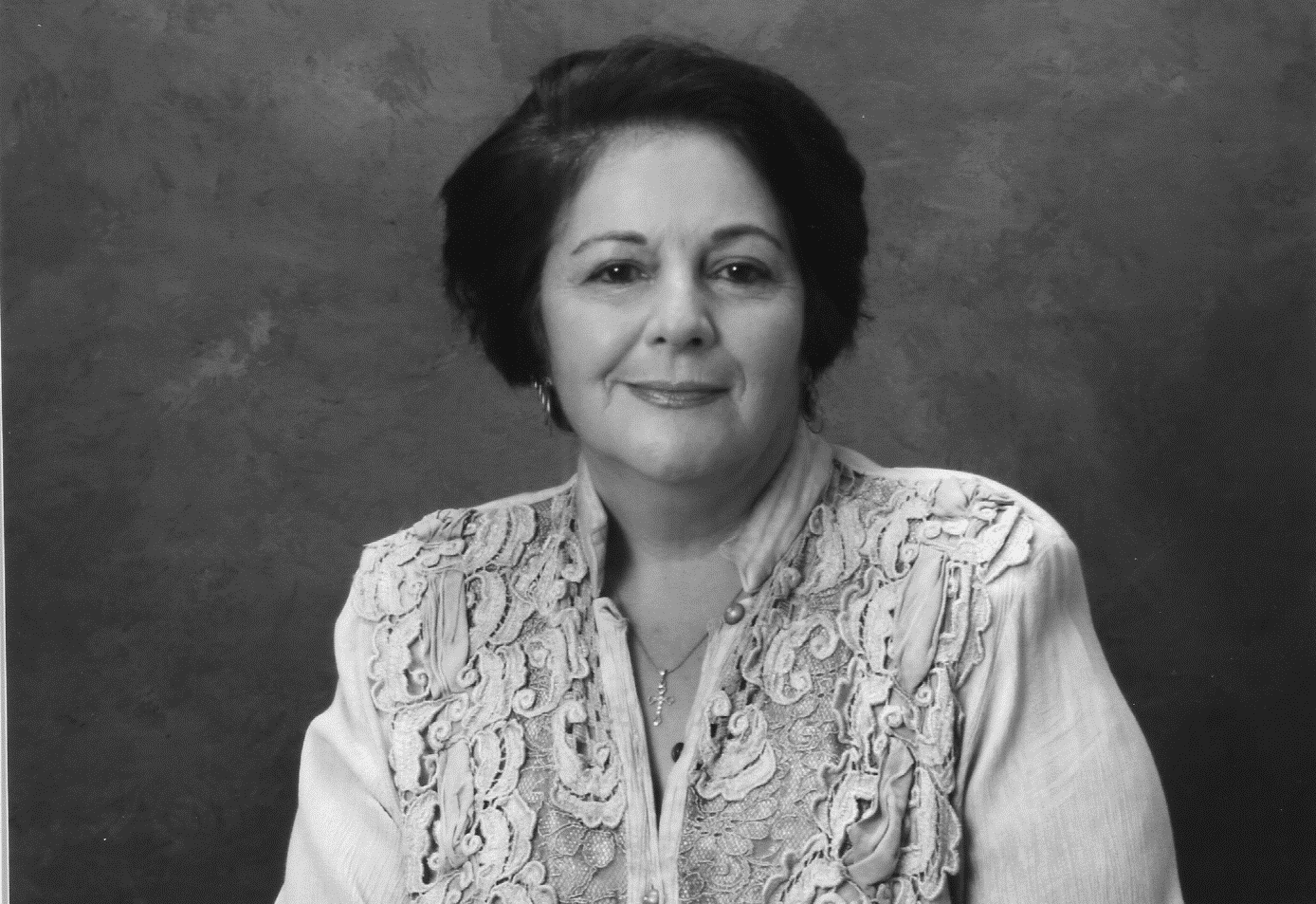


Dr. Arianne Ishaya is a cultural anthropologist and a faculty member at the De Anza College in Cupertino, California. She has published several books and many article on the history of Assyrian immigrants in northern America and other topics. 


William Daniel wrote the song of ܜܠܒܘܬܐ (Talabouta) in Teheran in the year 1942-1943. This was the most productive year in the career of William Daniel as an Assyrian music composer. During this time he composed more than 20 songs some of which he published in 1944 under the title of  ܙܗܪܝܪܐ ܕܐܘܡܢܘܬܐ (Rays of Artistic Inspiration).

            We can call this the year of the Assyrian musical renaissance It was made all possible because a prominent Assyrian by the name of Shidrak Aivazian, made a contract with Radio Iran for a half-hour weekly program in Assyrian. He hired William Daniel to have a 15-minute music slot in the program. William Daniel composed songs on a weekly basis and these were broadcast not only throughout Iran, but as far as Iraq.

            A unique characteristic of William Daniel was that he was not only a music composer, but also a poet. That is why there is an organic unity between the lyrics and the music in all these songs. He wrote the lyrics to his music himself and that magnified the emotional and aesthetic depth in his songs. What makes William Daniel’s songs more potent is that they are based on authentic Assyrian musical rhythms and tones. Moreover, before William Daniel most Assyrian songs were composed for ring dances such as janiman, sheikhani, etc. William Daniel wrote songs for listening pleasure.

            The song of “Talabouta” is no exception; but it has the added feature of being folkloric. It tells a story depicting a time period in the Assyrian history when the traditional social customs were changing under the impact of Western influences at the turn of the twentieth century.

            Under the old customs marriage was an alliance between two families rather than the marriage partners. Therefore to ask for the hand of a young woman, the bridegroom was accompanied by his parents, other elders of the family, as well as a few prominent people in the community to demonstrate that the family was well-established and of good reputation. The wedding expenses were paid by the father of the groom and even the guest list was composed by the parents rather than the bride and groom.

            Moreover, marriage was not an affair of the heart; rather it was based on a commitment to maintain the honor of the family by being responsible and raising good children. That meant that the husband had to be a good provider, and the wife had to be a good homemaker, making the welfare of her husband’s larger family a priority.

            But in the song we find a daring lad with no money, presenting himself alone to ask for the hand of a young maiden on the sole basis that he loves her! The dialogue that ensues between him and the girl’s parents is most entertaining and reveals other protocols in the Assyrian marriage customs that the young man cannot fulfill. These include buying expensive gifts such as “a watch made in America”, jewelry, silks and other expensive attire for the whole family.

            Eventually it all ends well when it is revealed that the young lad has a rich uncle from whom he will inherit a good fortune.  A hilarious dialogue follows where the father of the bride advises the lad to mix love with chastisement in order to keep his wife submissive and well-behaved.

            A fact that is rarely noted is that William Daniel was among the pioneers who brought western classical music to the Iranian public. In that sense he was a cultural broker. In these concerts the program was strictly based on pieces by Beethoven, Schubert, Rimsky-Korsakov, Strauss, Boccherini, Haydn, and other famous European composers. 


Sunday, July 25, 2010

The Story Behind William Daniel String Quartets

Last January MN project commissioned Sam Madoo to transcribe William Daniel String Quartets based a tape that Tony Khoshaba had kept for over a decade. We knew that Dr. Oshana Biblis had a role in the creation of these quartets but we did not know the details. Finally through the investigation of conductor John Kendall Bailey we found the original composer for the string quartets Mr. Peter Blauvelt. Read the story of these quartets from Mr. Blauveldt own words:

In 1996, Dr. Oshana Beblis and I got together to discuss transcribing several compositions for string quartet that his teacher William Daniel had written. The compositions had apparently been composed so that William Daniel and his student could play together. I was asked to transcribe two pieces, "Sonata in F" and "Elegy", that had been written for two violins and piano. I was also asked to transcribe a piece later named "Assyrian Rhapsody" that had only been written for two violins. This required adding two new parts that hadn't existed before to make the piece viable for string quartet. Since the duo had no title, we agreed on "Assyrian Rhapsody".

After those projects were completed, I was asked to write a three-movement string quartet using themes from William Daniel's output. This I did, using two thematic ideas for each movement and writing the piece around these themes, similar to theme and variations. The style I used is a more contemporary and Eastern sounding one than what William Daniel commonly wrote in. I called the piece "On Assyrian Mountains".

That same year, all four pieces were recorded in a Tampa studio with members of the Florida Orchestra ("Bayside Quartet").

It wasn't until four years later, in 2000, that I was contacted again for another string quartet project. The task was the same one as with "On Assyrian Mountains", except that I had more themes of William Daniel to work with. Rather than using mostly thematic material from his songs, as I did with the first quartet, I chose more of William Daniel's solo piano output for the second. The new quartet, named "On Assyrian Plains", uses a very similar structure and style as its predecessor, except that the new thematic material lent itself to making this piece a bit more elaborate and sophisticated.

"On Assyrian Plains" was premiered in St. Petersburg, FL, in 2001, as Dr. Oshana Beblis gave a fairly elaborate introduction at the concert. "On Assyrian Mountains" was also premiered in St. Petersburg, FL, but not until 2003. On both occasions the "Tampa Bay Composers' Forum String Quartet" did the honors.


About Peter Blauvelt


Peter Blauvelt was born in France and grew up in Germany where he began his studies in composition and piano. In 1975 he came to the U.S. where he studied at Harvard University in Cambridge, MA. There he received three degrees - including a doctorate in composition - and taught theory, composition and piano.

Since 1968 he has often given recitals - not only of his own pieces - in the U.S., France and Germany in public and on the radio, and has received numerous prizes for both composition and piano. Meanwhile, his pieces have also been performed in other European and North American countries.

After leaving the Boston area for Florida in 1984, he co-founded the "Tampa Bay Composers' Forum" in 1989 and served as treasurer, vice-president and president. He also founded Creative Arts and Tutoring Services" in 1990. To date, he has written over 140 compositions, mostly chamber music, and has had over 100 of them performed in public. A number of compositions are also available on CD."

Saturday, January 2, 2010

William Daniel String Quartets

In continuation of our effort to revive, document, and perform important works of Assyrian classical music, AAS-A Central Valley Chapter has commissioned the Assyrian musician Sam Madoo to transcribe and prepare the music scores of William Daniel String Quartets for the upcoming Mesopotamian Night 2010 concert fund raiser (the date to be announced later). These pieces were found by Dr. Oshana Beblis (the writer of the book titled "Myth of Enuma Elish/Assyrian And Babylonian Myth: First Story of Evolution" available at amazon.com) an old time friend of William Daniel and were once performed in Florida several years ago. These four string quartets are:

1. Assyrian Rhapsody

2. Elegy (for Armine Beblis)

3. Sonatta in ‘F’

4. On Assyrian Mountains

About Sam Madoo


Sam Madoo was born in 1974 in Iran. In Tehran he studied piano, music theory and harmony with Hanibal Yousef a talented Assyrian musician. Later on, he pursued his dream in California, by attending various music schools such as San Jose State University, Cal State San Bernardino, UC Riverside, and UC Irvine and received multiple degrees in Music Technology and Computer Music. He has recently been involved in live sound, recording, composition, production and post production for commercials and radio shows.

AAS-A Central Valley Chapter is pleased to work with young Assyrian talents such as Sam Madoo for our upcoming projects.

Monday, August 31, 2009

In Memory of Rabi William Daniel

The memories of Mesopotamian Night 2008 and the celebration of the music of William Daniel is again revived with the following clip from Victor Davoody. Once the DVD of the Mesopotamian Night 2009 is out we will have more clips to celebrate the art, music, and poetry of this Assyrian legend.

Monday, August 10, 2009

Tears from Tigris and Euphrates

The legendary singer and song writer Ashur Bet Sargis sent us this beautiful poster that we would like to share it with you. Let's reflect some more on the tears of late mentor and teacher Rabi William Daniel.