The video clip below is part of a series of interview presented in the Mesopotamian Night 2009 DVD.
Showing posts with label QATEENI. Show all posts
Showing posts with label QATEENI. Show all posts
Wednesday, April 21, 2010

Tuesday, August 18, 2009
Qateeni Opera: ACT I text
The Opera Qateeni
Based on the epic poem Qateeni Gabbara
By William Daniel
Composer: Michel Bosc
Libretto preparation by: Tony Khoshaba
Translation by: William Warda
Transliteration by: Avrahim Giliana
Diction By: Yosip Bet Yosip
Scene 1 - 1
Story Teller (Giliana):
Ptee-khi va soop-ra rvee-kha, A vast table was spread,
Go qass-ra d'Too-ma, In Tooma's castle.
Jim-yi-va aal-ma ra-ba, Where a large crowd had gathered,
Min mdee-ta v'zoo-ma. From the resort and the town.
Khvar-diq-ni tee-vi shtee-qi, The white bearded sat silent
Bttee-ni btakh-man-ta. Filled with thoughts.
Gab-ba-ri ree-shay kee-pi, The braves had their head bent
B'ah-val khish-shan-ta. In distraught.
mood mar-ra cool-la-na-ya, What contagious disease
Biy-ye tpee-qi va. Did they all have?
Mood khish-sha va knoosh-ya-ya, What common sorrow,
D'lgikh-ka khnee-qa va. Chocked off their laugh?
Ah soop-ra msham-ha v'diy-ya, This famous table
Go aat-ra-va-ti. Known in several lands,
Min-ni pal-ttee va va-di, Where countless brave deeds
D'gab-ba-roo-ya-ti. Had begun.
Ta-lim-ta d'kham-ra smoo-qa, The jar of the red wine
B'av-ra va btar-ra. Would enter through the door
Min lee-na l'soop-ra w'lba-ra, From the barrel and beyond
D'la qya-ta l'ar-ra. It would not touch the floor
Sho-ra va mee-da l'ee-da, It would bounce from hand to hand
Mat-to sa-poo-qi, Pouring its contents
Har-hoo-ri gikh-ka khdee-ta, Giggling, laughing, having
Poom-mo man-shoo-qi. Pleasure in being kissed on the lips.
Id-yoom oop ay khash-shan-ta, Today she too was sad,
L'kis Ma-lik tiv-ta, Sitting by Malik
Le va bij-va-ja msho-po, Not moving at all
Makh qa-ttoo siv-ta. Like an elderly cat.
Mood mkhoo-ta va sa-van-ta, What awful tragedy
D'mookh-riv-la l'kai-pay, Had destroyed their fun?
Mood it-ya sa-tta-na-ya, What devilish creature
Moos-mee-li l'gikh-cay? Had silenced their laugh?
Qa-moo-dee le toon shim-yi, Why! Haven’t you heard
Boot khar-vi kha-ti, Of the new destruction
D'moom-ttee-la Shid-da mid-ri, The monster inflicted
L'na-shi v'lkhai-va-ti. On the people and the beasts?
Akh d'in noo-ra d'gee-han-ni, As if the hell fires
L'sad-ro bis-ta-ra, Were tearing up her chest
Chma-ya ley va bich-ma-ya, Could not be extinguished
Bsha-qee-ta v'na-ra. By rivers and creeks.
L'sa-vo la msee-loon mat-ree, Not even the seas
oop la ya-ma-ti. Could quench her thirst.
Dim-mi va ay bib-ba-ya, Blood was what she craved for
Av d'ya-li v'bna-ti. Of young men and maidens.
B'khai-la d'khir-sho la mtakh-mi, By her boundless magic power
Ptil-la goor-vis-la. She grew big and wide.
It-ya la khzee-li rakh-mi, No creature felt her mercy
Cad l'madb-kho blis-la. All on her altar died.
Gab-bä-ri dvee-khi d'ga-na, How many more young braves
Hal ee-man aa-zee, Should leave
Sho-qee lya-lay w'lbakh-ta-tay, Abandoning their wives and kids
Go bikh-ya v'ta-zee. In tears and in grief.
Joon-ja-ra d' khiy-yal d'Too-ma, The agony of Tuma's plight
Kyoo-la lit-va-loon, Had no end
Sha-dir mid-ri gab-ba-ri, If more young men he sent
Qo-ma d'mit-va-loon. They too might die.
Mo-ta har bit aa-tee va, Death will arrive
Ha-da yan had-kha. One way or another.
Qttee-li Too-ma bree-ya-nu. In his mind Tuma decided
L'ma-roo-mu qat-kha, To raise the cup.
Mlee-li ca-sa min kham-ra, He filled the cup with wine,
W'lgab-ba-ri khir-ri, And stared at the mighty
L'ai chyat-ta spir-ta diy-yi, His awaited declamation
Ban khab-ri zmir-ri: He conveyed with this song:
Malik Tooma's invitation:
Ma-nee li av gab-ba-ra, Who is the mightiest man
Av gaw-ra d'gaw-ra d'da-ra, The mightiest of this time?
D'ma-khi m'dish-ta v'bar-riy-ya, Who will cross the plains and deserts
M'al room-ta m'go gal-liy-ya. The valleys and the highlands.
Ä-vir min al ttoo-ra-ni, Will pass over the mountains
Min doo-ka-ni sa-va-ni. And all the awful places.
M'akh gee-ra mtee-kha sa-tti, Soar like an arrow in flight
L'gan-na-ti d'Shid-da ma-tti. To reach the monster's orchards.
L'mal-ka-ni boosh sham-mee-ni, The most fertile farmlands
L'kar-ma-ni an boosh qee-ni. And the greenest of the fields.
Shid-da ttlee-ta ma-tchikh-la, Find the monster as it sleeps
W'qish-ti al-lo pa-tikh-la. Beat her till death
Shlad-do b'oom-qi da-ree-la, Dump her body in the deeps
Bgee-han-na mai-ca d'tee-la. Into the hell from where she emerged,
Pa-tikh l'ca-va-ti d'miy-ya, Open up the water dams
Makh-khi l'at-ra bar-riy-ya. Give new life to dying lands.
Kha-zin-ni Av gab-ba-ra, Can I see this mighty man
Av gaw-ra d'gaw-ra d'da-ra. The greatest man of our age
D'qazh-dir l'av khoob-ba sha-ti, Who will dare to drink this toast
D'zil-li qo-ma d'la aa-ti." That he may leave but not return?"
Story Teller (Giliana):
Cad hish bra-qa-lid zmoo-ri, The echoes of his song
Le va shil-yi mzan-goo-ri, Had not yet died out
Kin-sha shpikh-li go dar-ta, When a crowd spilled into courtyard
Biz-ma-ra l'aa-ha zmar-ta: Singing this other song.
Scene 1 - 2
Singers (Choir):
"Kha khzee-moon l'aa-too-ra-ya, Behold the Assyrian,
Min ttoo-ra-ni bis-la-ya, Coming down from the highland
Cool kha roov-shi kha dra-ya, He is tall his shoulders wide
ar-ra khoo-ti bitt-ba-ya, The earth sinks beneath his stride
Qa-ttee-ni qatt-tti too-ri. Qateeni the mountain leaper
Sad-ri shoo-sha d'a-vee-ni, His chest is strong as stone
Sha-tee-li kham-ra b'lee-ni, He drinks wine by barrels
It kha b'ga-va d'ash-shee-ni, Is there one among the braves
D'pa-lish am-ma d'Qat-tee-ni? Who will fight with Qateeni?
Qat-tee-ni qatt-tti ttoo-ri. Qateeni the mountain leaper.
In it gaw-ra zar-ba-na, If there is a mighty man
D'aa-siq l'ttoo-ra sa-va-na, Who can ascend the frightful peak
Ma-khi l'zar-ra d'sa-tta-na; Defeat the devilish creature
Aa-ha li av mas-ya-na. This is the only one,
Qat-tee-ni qatt-tti ttoo-ri. Qateeni the mountain leaper."
Story Teller (Giliana):
W'ha Qat-tee-ni bee-va-ra. As Qateeni enters
W'al-ma qav-voo-khi. The crowd gasps
W'qam d'av qo-ma gab-ba-ra, Before his mighty body
Tar-ra gam-boo-khi. The door collapses
Qateeni:
"B'shla-ma ow-rin yan b'pla-sha, Should I enter for fight or for peace,
Ya Kha-lee Too-ma? My uncle Tuma?
Bay-yin d'par-qakh l'doo-ra-sha, I want this quarrel to cease
Har id-yoom yoo-ma." On this very day".
Malik Tooma:
"b'shai-na tee-lookh khwar-zay-yi, Welcome my nephew
Bshai-na v'bash-la-ma. In peace and tranquility
B'ttaw-ta av ba-bee da-yee, Come forward
Ta-lookh la-qa-ma." With blessing my beloved.
Qateeni:
"M'qam d'qab-lit-lee b'dra-na-nookh, Before I am welcomed
Day-ya-na d'am-mi. Oh judge of the people
Bay-yin d'sham-min b'ri-ya-nookh, Declare verdict in the case
Boot kha-tookh ttam-mi." of your sister's disgrace.
Malik Tooma:
"Ta toov shmee-li boo-qa-ra, Come sit, and hear the question
D'joom-man-li id-yoo. That brought us together today
Bkhar-ta b'dar-shakh l'ee-qa-ra, Later the virtues
Dkha-tee Koo-rik-mu." Of my sister Kurikmu we will discuss.
Qateeni:
"He-miz-ma-ni sha-pee-ri, Beautiful words
Le na mal-ya-ni, Are not enough
D'bas-mee l'lib-va-ti tvee-ri, To mend the shattered hearts
W'makh-khee l'mo-ta-ni. Or to resurrect the dead.
Lak-ka d'shim-ma vd'ee-qa-ra, Insults to honor and name
D'nkhip-ta kee may-yi, Which bring forth shame
Akh-chee c'aa-ti liq-qa-ra, Can only be cleansed
Bi-iad ttee-ma d'khay-yi. By the payment of life.
Yan saq-ma-na yan sqee-ma, The accuser or the accused,
Cool d'ma-ri gna-ha, Whoever is at fault
B'ee-dee bit pa-yish tee-ma, Shall be punished by my hand
Ya-min b'Al-la-ha." I swear to God."
Malik Tooma:
"Boot shim-ma dikh-ya d'kha-tee, About the innocence of my sister
L'bah-ra vin plee-tta, I have been enlightened
Khir-ba moop-rim-la qa-tee, After being misled by
Kha niq-va lit-ta." A cursed woman."
Story Teller (Giliana):
It-va bil am-ma tee-vi, Sitting among the nobles
Kha Niq-va nookh-rai-ta, Was a stranger
Da-yim min lib-bo khree-va, From her wicked heart
Bish-ta biss-la-ya. Ceaselessly dripping evil
Stranger:
"Pin-da-na vit makh ta-la," “You are tricky as a fox.
D'bshitt-ri bay-yit liq-tta-la, With flattery you want to kill
Lboo-cha ya-too-ma. The bastard orphan.
Yan k'ho-yad lib-bookh rgid-li, Or may be your heart trembled
Mpitt-kha d'pit-yoo-nu, Because of his broad shoulders
D'bee-lookh biad khab-rid shid-li, Therefore with false words of praise
Shai-pit lkhizh-boo-nu. His claims you hope to erase.
Yoor-khad qo-ma vd'sha-qa-ni, Length of body and limbs
Ap in nee-shan-qa, Though symbols of youth
Bno-shei le na mal-ya-ni, Are not solely enough
D'ba-ni kha jvan-qa." To make a man.”
Malik Tooma:
"Tchoom l'av pům-makh shikh-ta-na, "Shut your filthy mouth
Khriv-ta d'bar-riy-ya, The depraved of the desert
Da-ya la dee-lee aa-na, I never found out
Mai-ca vat tee-ta." Where you came from.”
Stranger:
Aa-na har ai nish-sha van, ''I am the very woman
D'yoo-vil-to van rä-ei, Who gave you my advice
W'lai d'am-mookh big-ra-sha van, For putting up with you
Doo vit bip-ra-yee." You are paying me thus."
Malik Tooma:
"Ra-yakh akh-lee min ree-shakh, To hell with you
Tlooq min qam pa-tee, And your advice
Yan moor moo-dee-va nee-shakh, Tell me of your aim
Go qis-sat d'kha-tee. In my sister's case.
In priq-lan m'ah Ga-han-na, If we ever survive the hell
D'bree-shan bis-la-ya, Looming over our head,
Dee-va-nakh bid ow-din-na, be warned stranger,
Dee ya nookh-rei-ta." I will decide your fate
Qateeni:
"Dee-va-nookh Tooma Kha-lee, Don't let your judgment err
Khil-tti la hass-la, My uncle Tuma.
Min ba-ba l'broo-na k'sa-lee, From father to the son
Cool zid-qi d'as-la. All rights are inherited.
Khsheekh-ta la ai lpoor-aa-na, She deserves to earn her pay
D'pil-kha-na vee-da, For what she has done
W'bid qab-la la ah da-na. And shall receive it right away
W'har b'aa-ha ee-da. By this very hand."
Story Teller (Giliana):
W'lti-vil-ta d'sho-ta-poo-ta, The leach of the society,
L'par-san-ta d'mar-ra." And the spreader of disease,
Qa-ttee-ni har bkha mkhoo-ta, Qateeni with one blow
Bli-sa-li l'ar-ra. Smashed her on the floor.
Ttbee-la oop ah qa-vam-ta, All this event sank
Go ya-ma d'da-na. In the ocean of time
Akh-chee pish-la hoom-zim-ta, But it is only remembered
B'lott-ta lsa-tta-na." When the devil is cursed.
Story Teller (Giliana):
Ca-sa aa-tee-qa d'da-va, The old cup of gold
Ma-lik kha-sha-na, The sad Malik,
Mlee-li min kham-ra sa-va, Filled with old wine
Khil-ya makh sha-na. Sweet and fine.
Ca-sa go ee-di qim-li, Cup in hand he stood
W'lgab-ba-ri khir-ri, Staring at the nobles.
Qa-li bqas-ra goor-gim-li, His voice thundered in the castle
B'ay zmar-ta d'zmir-ri: As he shared this song:
Scene 1 - 3
Malik Tuma’s Song:
"Ma-nee li av gab-ba-ra, Who is the mightiest man
D'la lip-li d'da-yir l'ba-ra. The man who will never retreat
Qad-kha d'shtee-lee sha-tee-li. Who will drink a cup with me
Har b'kha bee-na mas-pee-li. Here now for all to see
Shva-ra d'shvir-ree sha-vir-ri, Who will take the stride that I took
Poog-da-nee la ta-vir-ri. Whatever I command he will do
Ma-khi min at-ra siy-ya, He will travel from dry land
D'la miy-ya d'la mar-riy-ya. Dry of water and pastures
Aa-zil l'ttoo-ra sa-va-na, Cross the frightful mountain
Ree-shi qree-ma go 'na-na. His head wrapped in gloom
Shid-da ttlee-taa ma-chikh-la, Find the monster as she sleeps
Qish-ti al-lo ma-tikh-la. with his arrows bring about her death
cham-chim-la l'oom-qi shlad-do, Dump her body in the deeps
Ta-likh loon bar-ro w'sad-do. Wreck its dams and levies
Shap-khee go at-ra miy-ya, Let once more the water flow
Khay-yi mid-ri bar-riy-ya. Revive again the desert below
Ga-bi min car-mo may-yi, Pick from its garden and bring
Kha khpa-qa gil-la d'khay-yi. An armful of the plant of life
Av d'pa-tikh l'ay-na smee-ta, That restores a blindman’s sight
B'rei-khi ra-ish oop mee-ta. It’s smell revives those who died.
Ma-nee l'av khoob-ba bsha-ti, Who will drink to the love
Zil-li qav-ma d'la aa-ti. That he may leave but not return to?
Ma-nee-li av gab-ba-ra, Who is the brave man
Av gav-ra d'gav-ri d'da-ra?" The bravest one of this time?
Story Teller:
Ai-ga Qa-ttee-ni gav-ra, Then Qateeni the great
Qav-moo makh-khoo-yi sav-ra. Whose presence inspired hope
Hoom-zim-li, b'ee-di ca-sa, Held up his cup and spoke
Shish-li bei-ta mshoo-ta-sa. And shook foundation of the house
Amir: and said
Qateeni's Song:
"Ma-lik ha aa-na,
am-mookh lish-ta-yoo ma-na, I will drink the cup with you
Bsho-rin-ni shva-ra d'shvir-rookh, Will take the stride you took
Btam-mim-min min-dee d'mir-rookh. Will accomplish what you say.
La dish-ya-ti d'la miy-ya, Neither the lands without water
La av noo-ra d'bar-riy-ya. Nor the fires of the desert
La ttoo-ra-ni sa-va-ni, Not the frightful mountains
La ee-too-ta d'sa-tta-ni, Not the existence of devils
W'la as-qoo-ta go shvee-la, Or the burden of the task
Roo-khee le mak-chikh-khee-la. Will ever tire my soul.
B'as-qin b'ttoo-ra d'makh-va-ti, I will ascend the mount of affliction
Oop in khree-za b'skin-ya-ti. Even if studded with blades
M'qam sai-pee broo-na d'bir-qa, From my sword, the breed of lightning,
Shid-da le mas-ya ar-qa. The monster cannot escape.
Bit rap-pin b'oom-qi shlad-do, I will dump her corpse in well
Bit tal-khin bar-ro w'sad-do. Will wreck her dams and spells
Mlee-moon-li ca-see spee-qa, Fill up my empty cup
M'av kham-ra boosh aa-tee-qa. With the oldest wine
Sha-tin l'av khoob-ba goo-ra, Which I'll drink to the greatest love
D'qa-mi ra-gid oop ttoo-ra. That shakes even the mountains.
Ee-na kha-lee moor ma-lookh? But my uncle tell me what is wrong
Qa-moo ay-nookh lkee-za-lookh? Why did you wink your eye?
Ttoov-va d'min qam d'aa-zin-va, I wish I knew the secrets of your heart
L'ttish-va d'lib-bookh kha-zin-va. Before I depart.
Scene 1-4
Qateeni:
Gaw-ri cash-shee-ri w'zree-zi, The ever-ready heroic braves
L'kha-doo-ri d'soop-ra khree-zi, Sitting around this table
Ca-so-khoon vei-na bree-zi, Your cups are pretty dry
Ca-so-khoon dsee-ma v'da-va. Your cups of silver and gold.
Qa-mu qa-lo-khoon shtee-qa? Why are your voices hushed?
Qa-mu ran-go-khoon ree-qa? Why do you all look pale?
Qa-mu ca-so-khoon spee-qa? Why do you all look pale?
Hish le-li tee-man khra-va. We’ve not yet been crushed.
Sha-takh l'av khoob-ba goo-ra, Let's drink to the greatest love
Khai-la-na mcool is-soo-ra, Stronger than all bonds
D'nttee-ran-li l'aa-ha do-ra, Which has saved us to this day
Av khoob-ba d'ba-ba sa-va." The love of our ancestors.
Qateeni Continues:
"M'qam d'aa-zin lit-pa-qa b'ai Shid-da te-man-ta, Before I depart to confront the terminator shidda
Kha-loo-vee shmee sa-pin biy-yookh khda he-man-ta. My uncle listen to you I entrust a request
Ha yim-mee ar-mil-ta go be-ta nookh-ra-ya, My widowed mother in another land
Bikh-kha-ya khoot shim-ma av d'yim-ma d'kha ra-ya, Lives as the mother of a herder
Go khish-sha w'ool-sa-na va-re-nä yoo-ma-no, and in sorrow are passing her days
Min il-ta d'kha boo-sa d'khak-ma min san-ya-no. Because of a malicious scheme of her foes
Ttla gav-ri zar-ba-ni bit shad-rit may-yee-la, You will send three mighty braves to bring her back
Min gil-li rei-kha-ni gad-lit-la kha klee-la. Fashion her a crown from scented flowers
Boot shim-mo av dikh-ya w'dee-qa-ro d'la moo-ma, About her pure name and he spotless honor
Pshee-qa-eet qa al-ma bit ga-lit O Too-ma! You will tell all o, tuma
Qa shav-va yoo-ma-ni b'ya-vookh vin va-da, You have seven days to do this
W'in b'mit-kha d'ah zow-na la too-mim-lookh l'wa-da, But if you fail to do it in seven days
Ai-ga kha-lee kha-lee khash-vin ga-nookh mee-ta, Then my uncle consider yourself dead
Mqam khim-tee le khal-sit b'ga-va d'aa-ha bree-ta." You will have no place to hide in this world.
Giliana:
Ma-tta-la d'Qa-ttee-ni priz-la va kha qitt-aa, Qatteeni's shield made from one metal sheet
B'maj-goon-ya-ti d'nkha-sha maz-ri-cha-na lqee-tta. Was studded with many colorful beads
Kham-sha jvan-qi zakh-mi boosh zakh-mi d'go at-ra, Five strong men, the grandest of all
La msee-loon l'maj-voo-jo min ar-ra oop nit-ra. Could not lift it a bit from the ground
Dviq-li bi sim-ma-li w'al riv-shi tun-tir-ri, He threw it on his shoulder by left hand
Khaz-ya-ni b'oo-ja-ba cool kha b'shva-voo khir-ri. On-lookers were truly amazed then
Singers (Choir):
Had-kha khai-la d'dra-na La khzee-lan hal id-yoom Till now this kind of strength we haven't had,
Khee l'aa-lam Qa-ttee-ni gaw-ra vit min shra-ra, Live for ever Qateeni you are mighty
L'aa-nee d'go khish-ca-na at maz-riq-qit ba-ra. Shed light on those in darkness trapped
Ha le la boot diy-yookh d'rshim-te-la b'ctiv-ya-tan, Isn't you about whom our books have foretold?
D'bid aa-ti bid pa-si l'yal-loo-dan l'yal-ta-tan? That shall come to free the young and the old?
Giliana: (explaining the Widow and Qateeni encounter)
M'gee-ba-ni khoor-dee-loon Qa-ttee-ni Gab-ba-ra, From all sides people gathered around Qatteeni the brave
Cad l'sai-pu l'ma-tta-lu wl'jvan-qoo-tu bikh-qa-ra. Praised his shield, his youth, and his sword
Ha khak-ma kha-poo-ttu la qa-ma aal nee-shi, Some encouraged him to go forth
Cad khee-ni bee-ma-ru d'la a-zil kha b'no-shi. Others warned him not to go alone
Khda bakh-ta ta-ma va d'ar-mil-ta v'yim-ma va, There was a woman , a widow and mother
Boot tla-qa d'tray bnoo-no lib-bo doom-dim-mi va. Her hearth aching for her two sons
Moo-khab-no tee-la boot da gav-ra sha-ree-ra, She felt pity for the faithful young man
Joo-rib-la l'mak-loo-yu b'kha qa-la ma-ree-ra. And tried to stop him with a sad voice
Cad brik-ta qam aq-lu w'go pa-tu bikh-ya-ra, As she knelt in front of him and looked at his face
Bno-nei-ta v'par-pal-ta had-kha va bee-ma-ra: She begged him and implored and she spoke:
Widow: (trying to stop Qateeni from going)
"Door min oor-khookh Qa-ttee-ni, goo-ra-li khai-la d'dizh-min, Go back Qatteeni Great is the enemy’s might
Khoosh o-ree shin-ni khee-ni, bzar-ba boosh goo-ra chak-bin. Let some years go by Prepare for a hard fight
al pa-tookh ay d'kha ya-la, hish lit mab-yoo-ni shkhoom-ta, On your face of a boy There is not yet sign of beard
Khoos-ra-na le-ti l'kya-la, d'tal-qa bnoov-vo ah qoom-ta. It would be a great loss If this young stature disappear
Lit khizh-boo-na id-yoo-ma, kma gab-ba-ri kma zakh-mi, Up to now we have lost count Of many mighty and brave
Me-loon aal madb-kha koo-ma, madb-kha d'Shid-da d'la rakh-mi." that the black altar of Sheeda Became their grave
Qateeni:
"Hitch la zad-yat yim-mee, Don’t fear my mother
At la gash-qat l'shin-nee, Don’t judge me by my youth
k'ho-ya d'la-vin msham-ha gab-ba-ra, I may not be a famous hero
Ee-na la qoov-vim-la, But has not yet happened
D'ga-va d'had-kha mam-la, in such situation
Qa-ttee-ni m'oor-khoo da-yir l'ba-ra. that Qatteeni ever From his goal retreats
Shmee l'aa-ha mo-mee-ta, Listen to this oath
B'dkha-ra d'ba-bee mee-ta, By the memories of my deceased father
Mttee-li yoom kha-ra-ya d'brat shee-da. This is the last day of the monster's daughter
Hish yoo-man la gin-ya, Before the day’s end
Hish sa-ra la tin-ya, Before the moon returns
Mai-ta bid mai-ta ay b'ah ee-da." By these hands she shall die
Widow:
Ttoov-van-ta la ay yim-ma, w'khash-kha pai-sha moo-rim-ta, Blessed is your mother, deserves to be praised
D'had-kha zar-ri maq-qim-ma, d'ha-vee poor-qa-na l'oom-ta.
That such a son she has raised, Who will bring salvation to a nation
Lib-va-tan bttee-ni b'sloo-ta, am-mookh da-yim bit ha-vee, Our hearts full of prayers, Will always be with you
Bitt-la-ba b'nas-see-khoo-ta, d'cool-lay oor-kha-tookh sha-vee. We ask that your road be smooth, You indeed are the one
At ee-vit sha-ree-ra-eet, l'av d'spir-ran mdo-ri vee-ri, For whom we have waited, since times by gone
D'la diy-yookh poor-qa-na lit, l'a-nee d'go bet as-see-ri." Without you there is no freedom , For those in bondage held
Qateeni:
"B'ah kya-na sha-ree-ra, With this honest soul
B'ah bah-ra d'na-hee-ra, With this shining sun
Bya-vakh-vin qo-la qad-dee-sha, I give you my holy oath
D'mqam A-la-ha d'lei-li, That before the god of nightfall
Ma-shik-noo sa-lee-li, The tent of darkness brings down
Dizh-min bid pa-yish d'la ree-sha. The enemy will lose her head
Zo-da le qav-vim-ma, It will not take long
D'Shid-da sar-pa dim-ma, When Shidda will be soaked in blood
Dim-mee-ta mshee-la m'aal sa-sa-nakh. Wipe away the tears from your face
Hish yoo-man la gin-ya, Our day is not yet done
Hish sa-ra la tin-ya, Before the rising of the moon
Bkhap-qat-loon bnoo-nakh go dra-na-nakh." You shall embrace your two sons
Giliana:
Ma-la-kha d'ttai-boo-ta bgool-pa-nu zar-ba-ni, The angel of Goodness, on her mighty wings
Moom-ttee-li l'ai zmar-ta hal qas-ra d'sa-tta-ni, Delivered his song to the satan's den
W'zoon-gir-ra go lib-ba d'as-see-ri d'la gna-ha, In the heart of the enslaved it kindled hope
W'mood-dir-ri joov-va-bay iz-gad-da d'A-la-ha. The God’s messenger brought back what they spoke
Had-kha zmar-ta d'aa-ni d'nee-ra d'dizh-min ttee-na The Song of the slaves toiling under yoke.
Zoon-gir-ra sip-ya-eet l'nat-ya-tid Qa-ttee-ni. Rang clearly in Qatteeni’s ears:
Shidda Prisoners' song:
"akh nee-ra ya-qoo-ra, lit tya-ma bjoon-ja-ra! Alas the heavy yoke, no end to the torture in sight.
L'an khay-yan go mra-ri, le za-riq kha bah-ra? On our bitter life shouldn't shine some light?
ai-ka li av d'ga-rag aa-tee-va l'pa-roo-qan? Where is the one to free us shall come?
Qatt-ttee-va l'is-soo-ri min ee-dan min sha-qan? To cut the shackles from our legs and arm.
Ya zakh-ma av spee-ra b'dra-na-nookh zar-ba-ni, O brave who was expected, with your arms so strong
Ta toom-li ka-poo-ra man-pil-li shool-tta-ni." Destroy this tyrant put an end to this wrong
Widows last song:
"Shmee-lookh l'a-ha o-li-ta, ya Qa-ttee-ni dvikh ga-na, Did you hear their cries, o noble Qatteeni?
B'gool-pid po-kha moo-yee-ta? Bis-pa-ri na lpoor-qa-na. Delivered on the wings of the wind? They all yearn to be free .
Kool ga-ha d'sham-makh l'an-ni ta-nakh-ya-ti d'moo-ghib-ban, Whenever we hear the lament of our beloveds .
Noo-ra zaa-lim d'gee-han-ni k'ha-vi ma-qoo-du lib-ban. The merciless flames of hell set our heart afire
Il-lookh ee-na biq-ra-ya bkha qav-vakh-ta knoosh-yai-ta, All together they cry out for help
Maam-ttee qa-te poo-sa-ya, la-vid hee-viy-ye mai-ta." Liberate them before their hope expire
Qatteeni Last song before his departure to fight Shidda:
Jvan-qan oop kha-ma-tan, Our sons and daughters
Chlij-te-la m'ee-da-tan, she has snatched from our arms
Kha-yi aal kin-pa d'ttoo-ra qvee-ri, Has buried them alive on the highest peak
Sham-mee-ram khaz-ya-va, If Shamiram this could see
Ma-ree-ra b'yal-ya-va, She would bitterly weep
Qa ya-lo b'mool-ca-no as-see-ri, Her children in their homeland enslaved
Khim-ta b'ga-va d'sad-ree, The fury in their chest
Noo-ra dree-la b'pagh-ree, sets them aflame
Ma-qoo-dee makh kha la-ha kha-ya, burning them in roaring blaze
In l'Shid-da la tai-min, If I don’t destroy the monster
Mat-vin ree-shee nai-min, Then in slumber I shall lay my head
Le vin broon Gil-ga-mish Nin-va-ya. And am not the son of Gilgamesh the Great.
Based on the epic poem Qateeni Gabbara
By William Daniel
Composer: Michel Bosc
Libretto preparation by: Tony Khoshaba
Translation by: William Warda
Transliteration by: Avrahim Giliana
Diction By: Yosip Bet Yosip
Scene 1 - 1
Story Teller (Giliana):
Ptee-khi va soop-ra rvee-kha, A vast table was spread,
Go qass-ra d'Too-ma, In Tooma's castle.
Jim-yi-va aal-ma ra-ba, Where a large crowd had gathered,
Min mdee-ta v'zoo-ma. From the resort and the town.
Khvar-diq-ni tee-vi shtee-qi, The white bearded sat silent
Bttee-ni btakh-man-ta. Filled with thoughts.
Gab-ba-ri ree-shay kee-pi, The braves had their head bent
B'ah-val khish-shan-ta. In distraught.
mood mar-ra cool-la-na-ya, What contagious disease
Biy-ye tpee-qi va. Did they all have?
Mood khish-sha va knoosh-ya-ya, What common sorrow,
D'lgikh-ka khnee-qa va. Chocked off their laugh?
Ah soop-ra msham-ha v'diy-ya, This famous table
Go aat-ra-va-ti. Known in several lands,
Min-ni pal-ttee va va-di, Where countless brave deeds
D'gab-ba-roo-ya-ti. Had begun.
Ta-lim-ta d'kham-ra smoo-qa, The jar of the red wine
B'av-ra va btar-ra. Would enter through the door
Min lee-na l'soop-ra w'lba-ra, From the barrel and beyond
D'la qya-ta l'ar-ra. It would not touch the floor
Sho-ra va mee-da l'ee-da, It would bounce from hand to hand
Mat-to sa-poo-qi, Pouring its contents
Har-hoo-ri gikh-ka khdee-ta, Giggling, laughing, having
Poom-mo man-shoo-qi. Pleasure in being kissed on the lips.
Id-yoom oop ay khash-shan-ta, Today she too was sad,
L'kis Ma-lik tiv-ta, Sitting by Malik
Le va bij-va-ja msho-po, Not moving at all
Makh qa-ttoo siv-ta. Like an elderly cat.
Mood mkhoo-ta va sa-van-ta, What awful tragedy
D'mookh-riv-la l'kai-pay, Had destroyed their fun?
Mood it-ya sa-tta-na-ya, What devilish creature
Moos-mee-li l'gikh-cay? Had silenced their laugh?
Qa-moo-dee le toon shim-yi, Why! Haven’t you heard
Boot khar-vi kha-ti, Of the new destruction
D'moom-ttee-la Shid-da mid-ri, The monster inflicted
L'na-shi v'lkhai-va-ti. On the people and the beasts?
Akh d'in noo-ra d'gee-han-ni, As if the hell fires
L'sad-ro bis-ta-ra, Were tearing up her chest
Chma-ya ley va bich-ma-ya, Could not be extinguished
Bsha-qee-ta v'na-ra. By rivers and creeks.
L'sa-vo la msee-loon mat-ree, Not even the seas
oop la ya-ma-ti. Could quench her thirst.
Dim-mi va ay bib-ba-ya, Blood was what she craved for
Av d'ya-li v'bna-ti. Of young men and maidens.
B'khai-la d'khir-sho la mtakh-mi, By her boundless magic power
Ptil-la goor-vis-la. She grew big and wide.
It-ya la khzee-li rakh-mi, No creature felt her mercy
Cad l'madb-kho blis-la. All on her altar died.
Gab-bä-ri dvee-khi d'ga-na, How many more young braves
Hal ee-man aa-zee, Should leave
Sho-qee lya-lay w'lbakh-ta-tay, Abandoning their wives and kids
Go bikh-ya v'ta-zee. In tears and in grief.
Joon-ja-ra d' khiy-yal d'Too-ma, The agony of Tuma's plight
Kyoo-la lit-va-loon, Had no end
Sha-dir mid-ri gab-ba-ri, If more young men he sent
Qo-ma d'mit-va-loon. They too might die.
Mo-ta har bit aa-tee va, Death will arrive
Ha-da yan had-kha. One way or another.
Qttee-li Too-ma bree-ya-nu. In his mind Tuma decided
L'ma-roo-mu qat-kha, To raise the cup.
Mlee-li ca-sa min kham-ra, He filled the cup with wine,
W'lgab-ba-ri khir-ri, And stared at the mighty
L'ai chyat-ta spir-ta diy-yi, His awaited declamation
Ban khab-ri zmir-ri: He conveyed with this song:
Malik Tooma's invitation:
Ma-nee li av gab-ba-ra, Who is the mightiest man
Av gaw-ra d'gaw-ra d'da-ra, The mightiest of this time?
D'ma-khi m'dish-ta v'bar-riy-ya, Who will cross the plains and deserts
M'al room-ta m'go gal-liy-ya. The valleys and the highlands.
Ä-vir min al ttoo-ra-ni, Will pass over the mountains
Min doo-ka-ni sa-va-ni. And all the awful places.
M'akh gee-ra mtee-kha sa-tti, Soar like an arrow in flight
L'gan-na-ti d'Shid-da ma-tti. To reach the monster's orchards.
L'mal-ka-ni boosh sham-mee-ni, The most fertile farmlands
L'kar-ma-ni an boosh qee-ni. And the greenest of the fields.
Shid-da ttlee-ta ma-tchikh-la, Find the monster as it sleeps
W'qish-ti al-lo pa-tikh-la. Beat her till death
Shlad-do b'oom-qi da-ree-la, Dump her body in the deeps
Bgee-han-na mai-ca d'tee-la. Into the hell from where she emerged,
Pa-tikh l'ca-va-ti d'miy-ya, Open up the water dams
Makh-khi l'at-ra bar-riy-ya. Give new life to dying lands.
Kha-zin-ni Av gab-ba-ra, Can I see this mighty man
Av gaw-ra d'gaw-ra d'da-ra. The greatest man of our age
D'qazh-dir l'av khoob-ba sha-ti, Who will dare to drink this toast
D'zil-li qo-ma d'la aa-ti." That he may leave but not return?"
Story Teller (Giliana):
Cad hish bra-qa-lid zmoo-ri, The echoes of his song
Le va shil-yi mzan-goo-ri, Had not yet died out
Kin-sha shpikh-li go dar-ta, When a crowd spilled into courtyard
Biz-ma-ra l'aa-ha zmar-ta: Singing this other song.
Scene 1 - 2
Singers (Choir):
"Kha khzee-moon l'aa-too-ra-ya, Behold the Assyrian,
Min ttoo-ra-ni bis-la-ya, Coming down from the highland
Cool kha roov-shi kha dra-ya, He is tall his shoulders wide
ar-ra khoo-ti bitt-ba-ya, The earth sinks beneath his stride
Qa-ttee-ni qatt-tti too-ri. Qateeni the mountain leaper
Sad-ri shoo-sha d'a-vee-ni, His chest is strong as stone
Sha-tee-li kham-ra b'lee-ni, He drinks wine by barrels
It kha b'ga-va d'ash-shee-ni, Is there one among the braves
D'pa-lish am-ma d'Qat-tee-ni? Who will fight with Qateeni?
Qat-tee-ni qatt-tti ttoo-ri. Qateeni the mountain leaper.
In it gaw-ra zar-ba-na, If there is a mighty man
D'aa-siq l'ttoo-ra sa-va-na, Who can ascend the frightful peak
Ma-khi l'zar-ra d'sa-tta-na; Defeat the devilish creature
Aa-ha li av mas-ya-na. This is the only one,
Qat-tee-ni qatt-tti ttoo-ri. Qateeni the mountain leaper."
Story Teller (Giliana):
W'ha Qat-tee-ni bee-va-ra. As Qateeni enters
W'al-ma qav-voo-khi. The crowd gasps
W'qam d'av qo-ma gab-ba-ra, Before his mighty body
Tar-ra gam-boo-khi. The door collapses
Qateeni:
"B'shla-ma ow-rin yan b'pla-sha, Should I enter for fight or for peace,
Ya Kha-lee Too-ma? My uncle Tuma?
Bay-yin d'par-qakh l'doo-ra-sha, I want this quarrel to cease
Har id-yoom yoo-ma." On this very day".
Malik Tooma:
"b'shai-na tee-lookh khwar-zay-yi, Welcome my nephew
Bshai-na v'bash-la-ma. In peace and tranquility
B'ttaw-ta av ba-bee da-yee, Come forward
Ta-lookh la-qa-ma." With blessing my beloved.
Qateeni:
"M'qam d'qab-lit-lee b'dra-na-nookh, Before I am welcomed
Day-ya-na d'am-mi. Oh judge of the people
Bay-yin d'sham-min b'ri-ya-nookh, Declare verdict in the case
Boot kha-tookh ttam-mi." of your sister's disgrace.
Malik Tooma:
"Ta toov shmee-li boo-qa-ra, Come sit, and hear the question
D'joom-man-li id-yoo. That brought us together today
Bkhar-ta b'dar-shakh l'ee-qa-ra, Later the virtues
Dkha-tee Koo-rik-mu." Of my sister Kurikmu we will discuss.
Qateeni:
"He-miz-ma-ni sha-pee-ri, Beautiful words
Le na mal-ya-ni, Are not enough
D'bas-mee l'lib-va-ti tvee-ri, To mend the shattered hearts
W'makh-khee l'mo-ta-ni. Or to resurrect the dead.
Lak-ka d'shim-ma vd'ee-qa-ra, Insults to honor and name
D'nkhip-ta kee may-yi, Which bring forth shame
Akh-chee c'aa-ti liq-qa-ra, Can only be cleansed
Bi-iad ttee-ma d'khay-yi. By the payment of life.
Yan saq-ma-na yan sqee-ma, The accuser or the accused,
Cool d'ma-ri gna-ha, Whoever is at fault
B'ee-dee bit pa-yish tee-ma, Shall be punished by my hand
Ya-min b'Al-la-ha." I swear to God."
Malik Tooma:
"Boot shim-ma dikh-ya d'kha-tee, About the innocence of my sister
L'bah-ra vin plee-tta, I have been enlightened
Khir-ba moop-rim-la qa-tee, After being misled by
Kha niq-va lit-ta." A cursed woman."
Story Teller (Giliana):
It-va bil am-ma tee-vi, Sitting among the nobles
Kha Niq-va nookh-rai-ta, Was a stranger
Da-yim min lib-bo khree-va, From her wicked heart
Bish-ta biss-la-ya. Ceaselessly dripping evil
Stranger:
"Pin-da-na vit makh ta-la," “You are tricky as a fox.
D'bshitt-ri bay-yit liq-tta-la, With flattery you want to kill
Lboo-cha ya-too-ma. The bastard orphan.
Yan k'ho-yad lib-bookh rgid-li, Or may be your heart trembled
Mpitt-kha d'pit-yoo-nu, Because of his broad shoulders
D'bee-lookh biad khab-rid shid-li, Therefore with false words of praise
Shai-pit lkhizh-boo-nu. His claims you hope to erase.
Yoor-khad qo-ma vd'sha-qa-ni, Length of body and limbs
Ap in nee-shan-qa, Though symbols of youth
Bno-shei le na mal-ya-ni, Are not solely enough
D'ba-ni kha jvan-qa." To make a man.”
Malik Tooma:
"Tchoom l'av pům-makh shikh-ta-na, "Shut your filthy mouth
Khriv-ta d'bar-riy-ya, The depraved of the desert
Da-ya la dee-lee aa-na, I never found out
Mai-ca vat tee-ta." Where you came from.”
Stranger:
Aa-na har ai nish-sha van, ''I am the very woman
D'yoo-vil-to van rä-ei, Who gave you my advice
W'lai d'am-mookh big-ra-sha van, For putting up with you
Doo vit bip-ra-yee." You are paying me thus."
Malik Tooma:
"Ra-yakh akh-lee min ree-shakh, To hell with you
Tlooq min qam pa-tee, And your advice
Yan moor moo-dee-va nee-shakh, Tell me of your aim
Go qis-sat d'kha-tee. In my sister's case.
In priq-lan m'ah Ga-han-na, If we ever survive the hell
D'bree-shan bis-la-ya, Looming over our head,
Dee-va-nakh bid ow-din-na, be warned stranger,
Dee ya nookh-rei-ta." I will decide your fate
Qateeni:
"Dee-va-nookh Tooma Kha-lee, Don't let your judgment err
Khil-tti la hass-la, My uncle Tuma.
Min ba-ba l'broo-na k'sa-lee, From father to the son
Cool zid-qi d'as-la. All rights are inherited.
Khsheekh-ta la ai lpoor-aa-na, She deserves to earn her pay
D'pil-kha-na vee-da, For what she has done
W'bid qab-la la ah da-na. And shall receive it right away
W'har b'aa-ha ee-da. By this very hand."
Story Teller (Giliana):
W'lti-vil-ta d'sho-ta-poo-ta, The leach of the society,
L'par-san-ta d'mar-ra." And the spreader of disease,
Qa-ttee-ni har bkha mkhoo-ta, Qateeni with one blow
Bli-sa-li l'ar-ra. Smashed her on the floor.
Ttbee-la oop ah qa-vam-ta, All this event sank
Go ya-ma d'da-na. In the ocean of time
Akh-chee pish-la hoom-zim-ta, But it is only remembered
B'lott-ta lsa-tta-na." When the devil is cursed.
Story Teller (Giliana):
Ca-sa aa-tee-qa d'da-va, The old cup of gold
Ma-lik kha-sha-na, The sad Malik,
Mlee-li min kham-ra sa-va, Filled with old wine
Khil-ya makh sha-na. Sweet and fine.
Ca-sa go ee-di qim-li, Cup in hand he stood
W'lgab-ba-ri khir-ri, Staring at the nobles.
Qa-li bqas-ra goor-gim-li, His voice thundered in the castle
B'ay zmar-ta d'zmir-ri: As he shared this song:
Scene 1 - 3
Malik Tuma’s Song:
"Ma-nee li av gab-ba-ra, Who is the mightiest man
D'la lip-li d'da-yir l'ba-ra. The man who will never retreat
Qad-kha d'shtee-lee sha-tee-li. Who will drink a cup with me
Har b'kha bee-na mas-pee-li. Here now for all to see
Shva-ra d'shvir-ree sha-vir-ri, Who will take the stride that I took
Poog-da-nee la ta-vir-ri. Whatever I command he will do
Ma-khi min at-ra siy-ya, He will travel from dry land
D'la miy-ya d'la mar-riy-ya. Dry of water and pastures
Aa-zil l'ttoo-ra sa-va-na, Cross the frightful mountain
Ree-shi qree-ma go 'na-na. His head wrapped in gloom
Shid-da ttlee-taa ma-chikh-la, Find the monster as she sleeps
Qish-ti al-lo ma-tikh-la. with his arrows bring about her death
cham-chim-la l'oom-qi shlad-do, Dump her body in the deeps
Ta-likh loon bar-ro w'sad-do. Wreck its dams and levies
Shap-khee go at-ra miy-ya, Let once more the water flow
Khay-yi mid-ri bar-riy-ya. Revive again the desert below
Ga-bi min car-mo may-yi, Pick from its garden and bring
Kha khpa-qa gil-la d'khay-yi. An armful of the plant of life
Av d'pa-tikh l'ay-na smee-ta, That restores a blindman’s sight
B'rei-khi ra-ish oop mee-ta. It’s smell revives those who died.
Ma-nee l'av khoob-ba bsha-ti, Who will drink to the love
Zil-li qav-ma d'la aa-ti. That he may leave but not return to?
Ma-nee-li av gab-ba-ra, Who is the brave man
Av gav-ra d'gav-ri d'da-ra?" The bravest one of this time?
Story Teller:
Ai-ga Qa-ttee-ni gav-ra, Then Qateeni the great
Qav-moo makh-khoo-yi sav-ra. Whose presence inspired hope
Hoom-zim-li, b'ee-di ca-sa, Held up his cup and spoke
Shish-li bei-ta mshoo-ta-sa. And shook foundation of the house
Amir: and said
Qateeni's Song:
"Ma-lik ha aa-na,
am-mookh lish-ta-yoo ma-na, I will drink the cup with you
Bsho-rin-ni shva-ra d'shvir-rookh, Will take the stride you took
Btam-mim-min min-dee d'mir-rookh. Will accomplish what you say.
La dish-ya-ti d'la miy-ya, Neither the lands without water
La av noo-ra d'bar-riy-ya. Nor the fires of the desert
La ttoo-ra-ni sa-va-ni, Not the frightful mountains
La ee-too-ta d'sa-tta-ni, Not the existence of devils
W'la as-qoo-ta go shvee-la, Or the burden of the task
Roo-khee le mak-chikh-khee-la. Will ever tire my soul.
B'as-qin b'ttoo-ra d'makh-va-ti, I will ascend the mount of affliction
Oop in khree-za b'skin-ya-ti. Even if studded with blades
M'qam sai-pee broo-na d'bir-qa, From my sword, the breed of lightning,
Shid-da le mas-ya ar-qa. The monster cannot escape.
Bit rap-pin b'oom-qi shlad-do, I will dump her corpse in well
Bit tal-khin bar-ro w'sad-do. Will wreck her dams and spells
Mlee-moon-li ca-see spee-qa, Fill up my empty cup
M'av kham-ra boosh aa-tee-qa. With the oldest wine
Sha-tin l'av khoob-ba goo-ra, Which I'll drink to the greatest love
D'qa-mi ra-gid oop ttoo-ra. That shakes even the mountains.
Ee-na kha-lee moor ma-lookh? But my uncle tell me what is wrong
Qa-moo ay-nookh lkee-za-lookh? Why did you wink your eye?
Ttoov-va d'min qam d'aa-zin-va, I wish I knew the secrets of your heart
L'ttish-va d'lib-bookh kha-zin-va. Before I depart.
Scene 1-4
Qateeni:
Gaw-ri cash-shee-ri w'zree-zi, The ever-ready heroic braves
L'kha-doo-ri d'soop-ra khree-zi, Sitting around this table
Ca-so-khoon vei-na bree-zi, Your cups are pretty dry
Ca-so-khoon dsee-ma v'da-va. Your cups of silver and gold.
Qa-mu qa-lo-khoon shtee-qa? Why are your voices hushed?
Qa-mu ran-go-khoon ree-qa? Why do you all look pale?
Qa-mu ca-so-khoon spee-qa? Why do you all look pale?
Hish le-li tee-man khra-va. We’ve not yet been crushed.
Sha-takh l'av khoob-ba goo-ra, Let's drink to the greatest love
Khai-la-na mcool is-soo-ra, Stronger than all bonds
D'nttee-ran-li l'aa-ha do-ra, Which has saved us to this day
Av khoob-ba d'ba-ba sa-va." The love of our ancestors.
Qateeni Continues:
"M'qam d'aa-zin lit-pa-qa b'ai Shid-da te-man-ta, Before I depart to confront the terminator shidda
Kha-loo-vee shmee sa-pin biy-yookh khda he-man-ta. My uncle listen to you I entrust a request
Ha yim-mee ar-mil-ta go be-ta nookh-ra-ya, My widowed mother in another land
Bikh-kha-ya khoot shim-ma av d'yim-ma d'kha ra-ya, Lives as the mother of a herder
Go khish-sha w'ool-sa-na va-re-nä yoo-ma-no, and in sorrow are passing her days
Min il-ta d'kha boo-sa d'khak-ma min san-ya-no. Because of a malicious scheme of her foes
Ttla gav-ri zar-ba-ni bit shad-rit may-yee-la, You will send three mighty braves to bring her back
Min gil-li rei-kha-ni gad-lit-la kha klee-la. Fashion her a crown from scented flowers
Boot shim-mo av dikh-ya w'dee-qa-ro d'la moo-ma, About her pure name and he spotless honor
Pshee-qa-eet qa al-ma bit ga-lit O Too-ma! You will tell all o, tuma
Qa shav-va yoo-ma-ni b'ya-vookh vin va-da, You have seven days to do this
W'in b'mit-kha d'ah zow-na la too-mim-lookh l'wa-da, But if you fail to do it in seven days
Ai-ga kha-lee kha-lee khash-vin ga-nookh mee-ta, Then my uncle consider yourself dead
Mqam khim-tee le khal-sit b'ga-va d'aa-ha bree-ta." You will have no place to hide in this world.
Giliana:
Ma-tta-la d'Qa-ttee-ni priz-la va kha qitt-aa, Qatteeni's shield made from one metal sheet
B'maj-goon-ya-ti d'nkha-sha maz-ri-cha-na lqee-tta. Was studded with many colorful beads
Kham-sha jvan-qi zakh-mi boosh zakh-mi d'go at-ra, Five strong men, the grandest of all
La msee-loon l'maj-voo-jo min ar-ra oop nit-ra. Could not lift it a bit from the ground
Dviq-li bi sim-ma-li w'al riv-shi tun-tir-ri, He threw it on his shoulder by left hand
Khaz-ya-ni b'oo-ja-ba cool kha b'shva-voo khir-ri. On-lookers were truly amazed then
Singers (Choir):
Had-kha khai-la d'dra-na La khzee-lan hal id-yoom Till now this kind of strength we haven't had,
Khee l'aa-lam Qa-ttee-ni gaw-ra vit min shra-ra, Live for ever Qateeni you are mighty
L'aa-nee d'go khish-ca-na at maz-riq-qit ba-ra. Shed light on those in darkness trapped
Ha le la boot diy-yookh d'rshim-te-la b'ctiv-ya-tan, Isn't you about whom our books have foretold?
D'bid aa-ti bid pa-si l'yal-loo-dan l'yal-ta-tan? That shall come to free the young and the old?
Giliana: (explaining the Widow and Qateeni encounter)
M'gee-ba-ni khoor-dee-loon Qa-ttee-ni Gab-ba-ra, From all sides people gathered around Qatteeni the brave
Cad l'sai-pu l'ma-tta-lu wl'jvan-qoo-tu bikh-qa-ra. Praised his shield, his youth, and his sword
Ha khak-ma kha-poo-ttu la qa-ma aal nee-shi, Some encouraged him to go forth
Cad khee-ni bee-ma-ru d'la a-zil kha b'no-shi. Others warned him not to go alone
Khda bakh-ta ta-ma va d'ar-mil-ta v'yim-ma va, There was a woman , a widow and mother
Boot tla-qa d'tray bnoo-no lib-bo doom-dim-mi va. Her hearth aching for her two sons
Moo-khab-no tee-la boot da gav-ra sha-ree-ra, She felt pity for the faithful young man
Joo-rib-la l'mak-loo-yu b'kha qa-la ma-ree-ra. And tried to stop him with a sad voice
Cad brik-ta qam aq-lu w'go pa-tu bikh-ya-ra, As she knelt in front of him and looked at his face
Bno-nei-ta v'par-pal-ta had-kha va bee-ma-ra: She begged him and implored and she spoke:
Widow: (trying to stop Qateeni from going)
"Door min oor-khookh Qa-ttee-ni, goo-ra-li khai-la d'dizh-min, Go back Qatteeni Great is the enemy’s might
Khoosh o-ree shin-ni khee-ni, bzar-ba boosh goo-ra chak-bin. Let some years go by Prepare for a hard fight
al pa-tookh ay d'kha ya-la, hish lit mab-yoo-ni shkhoom-ta, On your face of a boy There is not yet sign of beard
Khoos-ra-na le-ti l'kya-la, d'tal-qa bnoov-vo ah qoom-ta. It would be a great loss If this young stature disappear
Lit khizh-boo-na id-yoo-ma, kma gab-ba-ri kma zakh-mi, Up to now we have lost count Of many mighty and brave
Me-loon aal madb-kha koo-ma, madb-kha d'Shid-da d'la rakh-mi." that the black altar of Sheeda Became their grave
Qateeni:
"Hitch la zad-yat yim-mee, Don’t fear my mother
At la gash-qat l'shin-nee, Don’t judge me by my youth
k'ho-ya d'la-vin msham-ha gab-ba-ra, I may not be a famous hero
Ee-na la qoov-vim-la, But has not yet happened
D'ga-va d'had-kha mam-la, in such situation
Qa-ttee-ni m'oor-khoo da-yir l'ba-ra. that Qatteeni ever From his goal retreats
Shmee l'aa-ha mo-mee-ta, Listen to this oath
B'dkha-ra d'ba-bee mee-ta, By the memories of my deceased father
Mttee-li yoom kha-ra-ya d'brat shee-da. This is the last day of the monster's daughter
Hish yoo-man la gin-ya, Before the day’s end
Hish sa-ra la tin-ya, Before the moon returns
Mai-ta bid mai-ta ay b'ah ee-da." By these hands she shall die
Widow:
Ttoov-van-ta la ay yim-ma, w'khash-kha pai-sha moo-rim-ta, Blessed is your mother, deserves to be praised
D'had-kha zar-ri maq-qim-ma, d'ha-vee poor-qa-na l'oom-ta.
That such a son she has raised, Who will bring salvation to a nation
Lib-va-tan bttee-ni b'sloo-ta, am-mookh da-yim bit ha-vee, Our hearts full of prayers, Will always be with you
Bitt-la-ba b'nas-see-khoo-ta, d'cool-lay oor-kha-tookh sha-vee. We ask that your road be smooth, You indeed are the one
At ee-vit sha-ree-ra-eet, l'av d'spir-ran mdo-ri vee-ri, For whom we have waited, since times by gone
D'la diy-yookh poor-qa-na lit, l'a-nee d'go bet as-see-ri." Without you there is no freedom , For those in bondage held
Qateeni:
"B'ah kya-na sha-ree-ra, With this honest soul
B'ah bah-ra d'na-hee-ra, With this shining sun
Bya-vakh-vin qo-la qad-dee-sha, I give you my holy oath
D'mqam A-la-ha d'lei-li, That before the god of nightfall
Ma-shik-noo sa-lee-li, The tent of darkness brings down
Dizh-min bid pa-yish d'la ree-sha. The enemy will lose her head
Zo-da le qav-vim-ma, It will not take long
D'Shid-da sar-pa dim-ma, When Shidda will be soaked in blood
Dim-mee-ta mshee-la m'aal sa-sa-nakh. Wipe away the tears from your face
Hish yoo-man la gin-ya, Our day is not yet done
Hish sa-ra la tin-ya, Before the rising of the moon
Bkhap-qat-loon bnoo-nakh go dra-na-nakh." You shall embrace your two sons
Giliana:
Ma-la-kha d'ttai-boo-ta bgool-pa-nu zar-ba-ni, The angel of Goodness, on her mighty wings
Moom-ttee-li l'ai zmar-ta hal qas-ra d'sa-tta-ni, Delivered his song to the satan's den
W'zoon-gir-ra go lib-ba d'as-see-ri d'la gna-ha, In the heart of the enslaved it kindled hope
W'mood-dir-ri joov-va-bay iz-gad-da d'A-la-ha. The God’s messenger brought back what they spoke
Had-kha zmar-ta d'aa-ni d'nee-ra d'dizh-min ttee-na The Song of the slaves toiling under yoke.
Zoon-gir-ra sip-ya-eet l'nat-ya-tid Qa-ttee-ni. Rang clearly in Qatteeni’s ears:
Shidda Prisoners' song:
"akh nee-ra ya-qoo-ra, lit tya-ma bjoon-ja-ra! Alas the heavy yoke, no end to the torture in sight.
L'an khay-yan go mra-ri, le za-riq kha bah-ra? On our bitter life shouldn't shine some light?
ai-ka li av d'ga-rag aa-tee-va l'pa-roo-qan? Where is the one to free us shall come?
Qatt-ttee-va l'is-soo-ri min ee-dan min sha-qan? To cut the shackles from our legs and arm.
Ya zakh-ma av spee-ra b'dra-na-nookh zar-ba-ni, O brave who was expected, with your arms so strong
Ta toom-li ka-poo-ra man-pil-li shool-tta-ni." Destroy this tyrant put an end to this wrong
Widows last song:
"Shmee-lookh l'a-ha o-li-ta, ya Qa-ttee-ni dvikh ga-na, Did you hear their cries, o noble Qatteeni?
B'gool-pid po-kha moo-yee-ta? Bis-pa-ri na lpoor-qa-na. Delivered on the wings of the wind? They all yearn to be free .
Kool ga-ha d'sham-makh l'an-ni ta-nakh-ya-ti d'moo-ghib-ban, Whenever we hear the lament of our beloveds .
Noo-ra zaa-lim d'gee-han-ni k'ha-vi ma-qoo-du lib-ban. The merciless flames of hell set our heart afire
Il-lookh ee-na biq-ra-ya bkha qav-vakh-ta knoosh-yai-ta, All together they cry out for help
Maam-ttee qa-te poo-sa-ya, la-vid hee-viy-ye mai-ta." Liberate them before their hope expire
Qatteeni Last song before his departure to fight Shidda:
Jvan-qan oop kha-ma-tan, Our sons and daughters
Chlij-te-la m'ee-da-tan, she has snatched from our arms
Kha-yi aal kin-pa d'ttoo-ra qvee-ri, Has buried them alive on the highest peak
Sham-mee-ram khaz-ya-va, If Shamiram this could see
Ma-ree-ra b'yal-ya-va, She would bitterly weep
Qa ya-lo b'mool-ca-no as-see-ri, Her children in their homeland enslaved
Khim-ta b'ga-va d'sad-ree, The fury in their chest
Noo-ra dree-la b'pagh-ree, sets them aflame
Ma-qoo-dee makh kha la-ha kha-ya, burning them in roaring blaze
In l'Shid-da la tai-min, If I don’t destroy the monster
Mat-vin ree-shee nai-min, Then in slumber I shall lay my head
Le vin broon Gil-ga-mish Nin-va-ya. And am not the son of Gilgamesh the Great.
The Opera Qateeni: The Liberetto
The following is the transliteration and the English translation of the opera Qateeni which will be performed on August 15th. Please read this text before attending the concert.
The Opera Qateeni
Based on the epic poem Qateeni Gabbara
By William Daniel
Composer: Michel Bosc
Libretto preparation by: Tony Khoshaba
Translation by: William Warda
Transliteration by: Avrahim Giliana
Diction By: Yosip Bet Yosip
Scene 1 - 1
Story Teller (Giliana):
Ptee-khi va soop-ra rvee-kha,A vast table was spread,
Go qass-ra d'Too-ma,In Tooma's castle.
Jim-yi-va aal-ma ra-ba, Where a large crowd had gathered,
Min mdee-ta v'zoo-ma. From the resort and the town.
Khvar-diq-ni tee-vi shtee-qi, The white bearded sat silent
Bttee-ni btakh-man-ta. Filled with thoughts.
Gab-ba-ri ree-shay kee-pi, The braves had their head bent
B'ah-val khish-shan-ta. In distraught.
mood mar-ra cool-la-na-ya, What contagious disease
Biy-ye tpee-qi va. Did they all have?
Mood khish-sha va knoosh-ya-ya, What common sorrow,
D'lgikh-ka khnee-qa va. Chocked off their laugh?
Ah soop-ra msham-ha v'diy-ya, This famous table
Go aat-ra-va-ti. Known in several lands,
Min-ni pal-ttee va va-di, Where countless brave deeds
D'gab-ba-roo-ya-ti. Had begun.
Ta-lim-ta d'kham-ra smoo-qa, The jar of the red wine
B'av-ra va btar-ra. Would enter through the door
Min lee-na l'soop-ra w'lba-ra, From the barrel and beyond
D'la qya-ta l'ar-ra. It would not touch the floor
Sho-ra va mee-da l'ee-da, It would bounce from hand to hand
Mat-to sa-poo-qi, Pouring its contents
Har-hoo-ri gikh-ka khdee-ta, Giggling, laughing, having
Poom-mo man-shoo-qi. Pleasure in being kissed on the lips.
Id-yoom oop ay khash-shan-ta, Today she too was sad,
L'kis Ma-lik tiv-ta, Sitting by Malik
Le va bij-va-ja msho-po, Not moving at all
Makh qa-ttoo siv-ta. Like an elderly cat.
Mood mkhoo-ta va sa-van-ta, What awful tragedy
D'mookh-riv-la l'kai-pay, Had destroyed their fun?
Mood it-ya sa-tta-na-ya, What devilish creature
Moos-mee-li l'gikh-cay? Had silenced their laugh?
Qa-moo-dee le toon shim-yi, Why! Haven’t you heard
Boot khar-vi kha-ti, Of the new destruction
D'moom-ttee-la Shid-da mid-ri, The monster inflicted
L'na-shi v'lkhai-va-ti. On the people and the beasts?
Akh d'in noo-ra d'gee-han-ni, As if the hell fires
L'sad-ro bis-ta-ra, Were tearing up her chest
Chma-ya ley va bich-ma-ya, Could not be extinguished
Bsha-qee-ta v'na-ra. By rivers and creeks.
L'sa-vo la msee-loon mat-ree, Not even the seas
oop la ya-ma-ti. Could quench her thirst.
Dim-mi va ay bib-ba-ya, Blood was what she craved for
Av d'ya-li v'bna-ti. Of young men and maidens.
B'khai-la d'khir-sho la mtakh-mi, By her boundless magic power
Ptil-la goor-vis-la. She grew big and wide.
It-ya la khzee-li rakh-mi, No creature felt her mercy
Cad l'madb-kho blis-la. All on her altar died.
Gab-bä-ri dvee-khi d'ga-na, How many more young braves
Hal ee-man aa-zee, Should leave
Sho-qee lya-lay w'lbakh-ta-tay, Abandoning their wives and kids
Go bikh-ya v'ta-zee. In tears and in grief.
Joon-ja-ra d' khiy-yal d'Too-ma, The agony of Tuma's plight
Kyoo-la lit-va-loon, Had no end
Sha-dir mid-ri gab-ba-ri, If more young men he sent
Qo-ma d'mit-va-loon. They too might die.
Mo-ta har bit aa-tee va, Death will arrive
Ha-da yan had-kha. One way or another.
Qttee-li Too-ma bree-ya-nu. In his mind Tuma decided
L'ma-roo-mu qat-kha, To raise the cup.
Mlee-li ca-sa min kham-ra, He filled the cup with wine,
W'lgab-ba-ri khir-ri, And stared at the mighty
L'ai chyat-ta spir-ta diy-yi, His awaited declamation
Ban khab-ri zmir-ri: He conveyed with this song:
The Opera Qateeni
Based on the epic poem Qateeni Gabbara
By William Daniel
Composer: Michel Bosc
Libretto preparation by: Tony Khoshaba
Translation by: William Warda
Transliteration by: Avrahim Giliana
Diction By: Yosip Bet Yosip
Scene 1 - 1
Story Teller (Giliana):
Ptee-khi va soop-ra rvee-kha,A vast table was spread,
Go qass-ra d'Too-ma,In Tooma's castle.
Jim-yi-va aal-ma ra-ba, Where a large crowd had gathered,
Min mdee-ta v'zoo-ma. From the resort and the town.
Khvar-diq-ni tee-vi shtee-qi, The white bearded sat silent
Bttee-ni btakh-man-ta. Filled with thoughts.
Gab-ba-ri ree-shay kee-pi, The braves had their head bent
B'ah-val khish-shan-ta. In distraught.
mood mar-ra cool-la-na-ya, What contagious disease
Biy-ye tpee-qi va. Did they all have?
Mood khish-sha va knoosh-ya-ya, What common sorrow,
D'lgikh-ka khnee-qa va. Chocked off their laugh?
Ah soop-ra msham-ha v'diy-ya, This famous table
Go aat-ra-va-ti. Known in several lands,
Min-ni pal-ttee va va-di, Where countless brave deeds
D'gab-ba-roo-ya-ti. Had begun.
Ta-lim-ta d'kham-ra smoo-qa, The jar of the red wine
B'av-ra va btar-ra. Would enter through the door
Min lee-na l'soop-ra w'lba-ra, From the barrel and beyond
D'la qya-ta l'ar-ra. It would not touch the floor
Sho-ra va mee-da l'ee-da, It would bounce from hand to hand
Mat-to sa-poo-qi, Pouring its contents
Har-hoo-ri gikh-ka khdee-ta, Giggling, laughing, having
Poom-mo man-shoo-qi. Pleasure in being kissed on the lips.
Id-yoom oop ay khash-shan-ta, Today she too was sad,
L'kis Ma-lik tiv-ta, Sitting by Malik
Le va bij-va-ja msho-po, Not moving at all
Makh qa-ttoo siv-ta. Like an elderly cat.
Mood mkhoo-ta va sa-van-ta, What awful tragedy
D'mookh-riv-la l'kai-pay, Had destroyed their fun?
Mood it-ya sa-tta-na-ya, What devilish creature
Moos-mee-li l'gikh-cay? Had silenced their laugh?
Qa-moo-dee le toon shim-yi, Why! Haven’t you heard
Boot khar-vi kha-ti, Of the new destruction
D'moom-ttee-la Shid-da mid-ri, The monster inflicted
L'na-shi v'lkhai-va-ti. On the people and the beasts?
Akh d'in noo-ra d'gee-han-ni, As if the hell fires
L'sad-ro bis-ta-ra, Were tearing up her chest
Chma-ya ley va bich-ma-ya, Could not be extinguished
Bsha-qee-ta v'na-ra. By rivers and creeks.
L'sa-vo la msee-loon mat-ree, Not even the seas
oop la ya-ma-ti. Could quench her thirst.
Dim-mi va ay bib-ba-ya, Blood was what she craved for
Av d'ya-li v'bna-ti. Of young men and maidens.
B'khai-la d'khir-sho la mtakh-mi, By her boundless magic power
Ptil-la goor-vis-la. She grew big and wide.
It-ya la khzee-li rakh-mi, No creature felt her mercy
Cad l'madb-kho blis-la. All on her altar died.
Gab-bä-ri dvee-khi d'ga-na, How many more young braves
Hal ee-man aa-zee, Should leave
Sho-qee lya-lay w'lbakh-ta-tay, Abandoning their wives and kids
Go bikh-ya v'ta-zee. In tears and in grief.
Joon-ja-ra d' khiy-yal d'Too-ma, The agony of Tuma's plight
Kyoo-la lit-va-loon, Had no end
Sha-dir mid-ri gab-ba-ri, If more young men he sent
Qo-ma d'mit-va-loon. They too might die.
Mo-ta har bit aa-tee va, Death will arrive
Ha-da yan had-kha. One way or another.
Qttee-li Too-ma bree-ya-nu. In his mind Tuma decided
L'ma-roo-mu qat-kha, To raise the cup.
Mlee-li ca-sa min kham-ra, He filled the cup with wine,
W'lgab-ba-ri khir-ri, And stared at the mighty
L'ai chyat-ta spir-ta diy-yi, His awaited declamation
Ban khab-ri zmir-ri: He conveyed with this song:
Saturday, August 8, 2009
The Tears of William Daniel
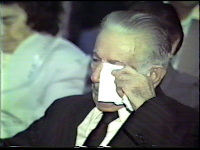
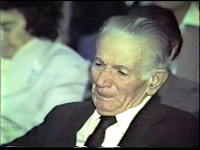
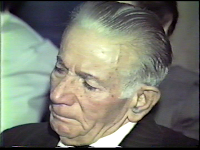
Recently Professor Edward Odisho sent us a video recorded in Chicago at Loyola University in 1986. This was an event held by Assyrian Academic Society in Honor of Rabi William Daniel. What was striking in this video was the "Tears of William Daniel" while he listens to recital of Qateeni poems in their original form in Tyari Assyrian dialect by Dr. Odisho. We think watching William Daniel crying in this video is a life changing experience for those of us who have passion for our culture and are determined to preserve and expand the Assyrian cultural heritage.
Dr. Odisho in his email to us writes:
"I should say that you are doing a fascinating and creative service which I admire ... I want your activities to be superbly successful because they are original and more or less unprecedented"
We will post the video on the web later but for now we want to leave you with a few photos of William Daniel as we get closer to see Qateeni performed for the first time as an opera.
Monday, July 27, 2009
QATEENI GABBARA: AN ASSYRIAN OPERA
By: Obelit Yadgar
French composer Michel Bosc can easily see Qateeni Gabbara, a work still in progress, becoming the first Assyrian National Opera. “It’s a very melodic and colorful opera that also has a universal appeal,” he says.
Scores of great European masters wrote operas based on historical Assyrian characters and legends. Semiramide, based on the legend of the Assyrian Queen Shamiram, especially comes to mind. At least 10 composers that I know of wrote operas titled Semiramide, based on the topic of Shamiram. Rossini, Ziani, Cimarosa, Gluck, Salieri, Porpora, Respighi, Paisiello, Mayberbeer and Handel all produced their own musical versions. Rossini’s Semiramide is the most famous.
Other operas based on an Assyrian topic include Verdi’s Nabuco (Nebuchadneser), and Henry Becque’s Sardanaple (inspired by Lord Byron’s Sardanapulus).
It is presumptuous to consider these Assyrian operas, especially since they are not sung in Assyrian. Qateeni Gabbara, however, is sung in Assyrian. An opera in Assyrian? And why not? We really have not changed from our ancestors, who produced magnificent works of art. We are the same people, and many of us have the same passion about the arts as did our ancestors in Mesopotamia. It’s just that some of us reach out a little harder to find them. Thus the Assyrian opera Qateeni Gabbara.
Currently only the overture and Act I of the opera are completed, but two more acts remain for composer Bosc and librettist Tony Khoshaba to finish. Although Bosc is not Assyrian by birth, his heart is near to that of ours. “Qateeni Gabbara is one of my dearest pieces and I have great ambition for it,” he adds. “Thanks to Qateeni I have Assyrian friends and I feel a little Assyrian, too, in my heart.”
“Now that we have funding for 2010 through the Irvine Foundation,” says Khoshaba, “we will start Qateeni’s completion. As soon as I finish the libretto for another act, Michel will compose the music.”
“It must become a real opera and I hope we’ll give it to real opera houses to perform,” adds Bosc. “I am extremely proud of it and I can’t wait to compose the second and the third acts.”
The opera is based in part on the Epic of Qateeni Gabbara by the late Assyrian musical and literary figure William Daniel. Comprising about 6,000 verses in three volumes, the epic was inspired by the Qateeni Gabbara folk tales known to have flourished in the Nineveh Plain of northern Iraq and some of the lands beyond.
“There are linguistic and cultural indications in the language that refer to tribal dialects, particularly the Tiari dialect of the mountains of Hakkari and the mountains north of Iraq,” says Assyrian scholar Edward Odisho.
The Qateeni Gabbara folk tales were sung by men and women in simple rhythm and framed with extensive Assyrian folk imagery. “No music in the real sense,” Odisho maintains. “Very simple rudimentary and repetitive rhythmic patterns. At times the style and metaphors are simple. However, in many instances they are very sophisticated and sensationally impressive.”
As the Qateeni Gabbara folktales lived on through the Assyrian centuries, they were never written down, says Assyrian scholar Arianne Ishaya. “The tales belong to an oral tradition passed down from generation to generation, and evolved in detail and poetic style by additions and deletions to suit the condition of each generation, the main theme and the main characters always staying the same.”
Ishaya also notes that Qateeni Gabbara focuses on the theme of good and evil. In the end, selfishness, deceit, arrogance and cruelty toward the weak, presented in the form of the female demon Shidda, are defeated by the powers of mercy, courage and selfless love, portrayed by the national hero Kateeni (Ishaya says Daniel used that particular spelling for the hero’s name). “In one way they are morality tales,” she adds. “In another, they are a message of hope to an oppressed minority.”
Daniel first came across the Qateeni Gabbara folk tales in 1946. His profound impression of them led him to write an epic based on the Qateeni character, Odisho points out. Subsequently he used the core of these Assyrian folktales, embellished them with stylistic and poetic ingenuity, and artistically transformed them into a complete epic.
“In the genre of epic poems,” Ishaya says, “its poetic beauty is unparalleled in the Middle East, and is in every way comparable to Greek masterpieces.”
Khoshaba discovered the Qateeni Gabbara folktales and William Daniel’s writing in his school years in Tehran through his Assyrian literature teacher Rabi Nimrod Simono. When he and his dear friend Sargon Ishoo left for America, Khoshaba recalls, they promised Simono they would never let the message of Qateeni Gabbara die. “Now twenty years later,” says Khoshaba, “I have an opportunity to fulfill my promise. I dedicate this effort to my late teacher Rabi Simono and my late friend Sargon Ishoo.”
Khoshaba chose to begin the opera with Chapter 7 in Book I of the Epic of Qateeni Gabbara. In the chapter, the feudal warlord Malik Tuma — who also is Qateeni’s uncle — challenges young men to destroy the demon Shidda.
Ishaya’s translation of Malik Tuma’s challenge in the chapter reads: “Who is the brave, the bravest of the brave, the bravest of all times, who is not afraid to climb the high mountains, squeeze through narrowest crevices, pass through plains, deserts and speedily land, like an arrow soaring through the air, on Shidda’s green meadows, and while she is in her slumber of 40 days, pick from the green plant to bring home a specimen that will give sight to the blind, and life to the dead?”
Here also, Qateeni meets his uncle for the first time, and accepts the challenge. This chapter is the story’s core, explains Khoshaba, when Qateeni begins his quest to destroy Shidda.
On the way, Qateeni encounters a large crowd that tries to prevent him from going against Shidda alone, including a woman who has lost her sons to Shidda, Ishaya notes in her translation of Scene III from the act. “This scene is a beautiful duet between Qateeni and the widow,” she says, “and where Qateeni gives hope to the people.” The scene ends with the choir of Shidda’s captive’s and Qateeni’s aria.”
Since Bosc does not speak Assyrian, one of the most important challenges he faced in writing the music was grasping the heart and soul of the Assyrian language. “The relation between language and musical thought were different from the usual,” he says. “I had composed in Latin, Spanish, English, Italian and French, languages I know.” He studied Assyrian, and had the opera’s text read to him. “We had special notation to help me with the Assyrian language,” he goes on. “To free my imagination, I had to forget that it was not my own language.”
Although an Assyrian opera, Qateeni Gabbara is written in Bosc’s own musical style. “Being honest is a promise of success,” he believes. “I wanted Qateeni to become one of my masterpieces.”
Perhaps it will.
“I envision the Mesopotamian Night project ultimately producing full-length Assyrian operas,” says Khoshaba. “But three things must happen to make this dream possible: partnership with an opera company, more funding, and excitement in the community to support full opera productions.”
The health and vitality of our performing arts is another way of showing the world that even though the Assyrian empire fell in 612 B.C., the Assyrian people did not, and that our arts continue to flourish. All one has to do is to reach out for them. Qateeni Gabbara is worth the effort, because it says a lot about who we are and where we come from. As the master of ceremonies and an Assyrian, for me, Qateeni Gabbara is one more nugget in the treasure of Assyrian performing arts to discover.
Sunday, July 5, 2009
Qateeni Gabbara: A William Daniel's Legacy
Mr. William Warda who has been helping us with translation of Qateeni poems in the following article give us a deep insight into the story of Qateeni Gabbara. We appreciate Mr. Warda's commitment and dedication to help us push the Qateeni Opera project ahead. We are hoping in the coming years we would be able to bring this fascinating story on stage as a full opera.
About William Warda
William Warda was born in Iran. In 1963 he arrived in the U.S. and continued his education at the Roosevelt University in Chicago. For many years he has been active member of various Assyrian organizations. For the last three and a half years he has served as the president of the Assyrian American Association of Southern California. He has written a number of articles about various aspects of the Assyrian history and the plight of the Assyrians in Iraq. Since 2004 he has managed the www.christiansofiraq.com website which is an archive of articles about the plight of the Assyrians in Iraq. He became interested in William Daniel's Qateeni Gabbara when it was first published in 1961, he enjoyed reading it more than any other book he had read in the Persian language or English. To acclimate Assyrians who can not read this book because they are not able to read the Assyrian Language, in 2004, he translated into English the chapter seven of the first book , titled “In Tuma's Castle”. That year it was published in the Journal of the Assyrian Academic Studies. The pdf file of that translation is available for download at www.jaas.org/edocs/v14n1/e9.pdf
Since then has translated in English most of the other chapters. He plans to publish translation of the entire book in the future.
The Story of Qateeni Gabbara
Qateeni Gabbara is William Daniel's most important contribution to the Assyrian literature, in the tradition of Homer and the Persian Poet Ferdosi he has saved an important literary heritage of his people. Qateeni Gabbara is one of the many legends narrated for centuries by the story tellers in the highlands of Hakkari, and towns in the plain of Nineveh which since then most have been lost from memory because they were not written down.According to William Daniel, in the mountains of Hakkari, story tellers traveled from one Assyrian village to another especially in the winter months when the inhabitants of these villages were homebound because of deep snow and freezing whether to tell stories of love, courage, betrayal and incredible bravery,.
Epics such as Qateeni are narrative poetry which recount the exploits of national super hero. This form of literature predates even the art of writing, the oldest of such epics is the story of Gilgamesh written at the earliest days of writing but has continued to fascinate humanity to this day, because it deals with issues of life and death, compassion and adventure which still fascinate us thousands of years later.
William Daniel’s Qateeni consist of 7000 verses rich with fascinating imagery, metaphors and innovative poetic techniques in various forms. It was not until 1946 when Daniel became aware of the heroic story of Qateeni Gabbara, and decided to retell it in his own poetry. In doing so he introduced new forms of verse rich with fascinating imagery and innovative poetic techniques in various forms which attest to his deep knowledge of the language, extensive vocabulary, grammar, and technical knowledge necessary to write delightful poetry by using rhyme, rhythm, melody and majestic choice of words to describe physical and spiritual concept that otherwise are difficult to communicate. Although Daniel was not the first writer or poet of the vernacular Assyrian language but he has shown how to write a story in verse which is captivating and fun to read. The contemporary Assyrian language was not used as literary language until the 19th century, before then the classical Assyrian language known as Syriac was the literary language of the church. It’s grand masters were primarily concerned with verses related to religion and the praise of the divine icons. Because of constant depredation against Assyrians there were no educational institutions where the ordinary people could learn to read and write their own language, William Daniel’s Qateeni Gabbara was published in three books by the Assyrian Youth Literary Society of Iran starting in 1961, along with writings of other unpublished Assyrian writers.
Unfortunately very little of the pre-William Daniel original folkloric legend has survived, because most of the Hakkari Assyrians were massacred during World War One and the survivors were forced to abandon their homes in the highlands and escape to Urmia in northwest Iran where another equally persecuted Assyrian community lived.
According to Yonan Hozayya, from Iraq, some segments of the legend are still being sung by the Assyrian villagers living in the plain of Nineveh in places such as Algush. Tilkeep, Baghdida, and others. Comparison between the random example provided by Yonan Hozayya versus what William Daniel wrote indicates that perhaps with certain exceptions he has preserved the basic elements of the original story as can be seen in the following versus:
The original
Qateeni the Mountain Splicer
His width the length of poplar
Day and night he is on the move
He is the great of the greatest
Jumps from roof to roof
Walks from one plain to the next
And drinks the vine from barrel
William Daniel’s version:
Behold the Assyrian,
Coming down from the highland
Each of his shoulders is a yard
The earth sinks beneath his stride (92)
Qateeni the Mountain Splicer
His chest is strong as stone
He drinks wine by barrels
Is there one among the braves
Who will fight with Qateeni,
Qateeni the Mountain splicer?. (98) (book one chapter seven)
Original:
He Ascends to the Lillita's orchard
The most frightful Lilitha
To picks an armful of the scented plant
Holding it in his wide hands
Its smell gives the blind eye sight
Resurrect from grave those who died
William Daniel’s version:
To ascend the frightful mountain
His head wrapped in gloom
Find the Shidda as she sleeps
with his arrows cause her doom (207)
Pick from its garden and bring
An armful of the plant of life
Which restores a blindman’s sight
It’s smell revives those who died. (215) (book one chapter seven)
Like most Assyrian poets of the 20th century William Daniel was driven by nationalism. His epic hero is willing to sacrifice all he has to liberate his people from the evil forces bent on destroying them. In other words Qateeni symbolically represents the Messiah that every Assyrian undoubtedly has hoped would come to save his people from the eventual extinction. In many ways Qateeni is similar to the popular American super heroes such as Superman, Spiderman, Batman, the X-Men and a host of others who are dedicated to ensuring social justice.
Throughout Daniel's Qateeni the message of deliverance is repeated in different forms. Such sentiments may sound a bit melodramatic to the contemporary reader but William Daniel like Fraidon Atouraya, John Alkhas, Addi Alkhas, Baba Bet Lachin and other Assyrian poets of his generation had first hand knowledge of the horrors inflicted on his nation during World War One.
Though Assyrians have suffered countless persecutions, the massacres of World War One have had greater enduring influence on their psyche. Because not only two third of their population was lost, the surviving population was driven out its homeland and scattered around the world. If not for the presence of the American and the French missionaries in Urmia who provided refuge for the unfortunate people the entire Assyrian population of that region would have been wiped out. It should be noted that Assyrians of the Chaldean Church and Syriac Orthodox Church also known as Suryoyee suffered similar fate in the cities and the villages of Turkey.
William Daniel born in 1903 lost his mother when he was only three years old. His father a prominent physician died from a malignant disease while caring for others dying form typhus, typhoid and other contagious infirmities resulted from taking refuge in crowded and unsanitary quarters. His three sisters disappeared along with thousands of other young Assyrian maidens who were forced into Islam. Some were sold as slaves in lands as far away as Lebanon. He was fifteen years old when the entire dispirited Assyrian nation left behind all they had and fled in disarray toward Mesopotamia later known as Iraq. But even then they were hunted down and killed by the military forces of their predators. It is natural that these tragic events will lead to a desire by him to exact revenge in writing for the injustices inflicted on his people, throughout the Epic of the Qateeni. If there is one thing which sets this epic apart from other super hero legends is the symbolic fusing of a heroic tale with real life struggles of an oppressed and persecuted people.
William Daniel's Nationalism was evident long before his work on Qateeni Gabbara. In spite of all the hardship he was able to travel to Europe and receive a valuable education in the classical music. Unlike thousands who had gone to the Western countries and had stayed he returned to Iran to enrich the cultural heritage of his people. In the early nineteen forties he organized the first Assyrian musical group which preformed Assyrian folkloric dances along with songs and music composed by the master. He published a music book in 1944 titled "Zahrirah D' Umanuta" or "Sun-rays of Art" which contained the music and the songs of his performances .
In translation to another language one can easily duplicate the meaning of the words and sentences but recreating the rhyme, rhythm, the mood and the music orchestrating in the reader's mind is something else. This translator does not pretend to be a poet. However, he has made a limited attempt at translating it for the sole purpose of offering those who cannot read the Assyrian language a rough idea of what Qateeni is all about. To truly enjoy the beauty of William Daniel's poetry, one has to read it in Assyrian language.
National awakening of Qateeni begins when his mother inspires him to use his wisdom and his super power to liberate his people from the evil of the tyrannical forces bent on destroying it .
In a tender moment she tells him:
There are select people
Chosen for great deeds
The good book has told
A prophecy uttered
On such 'n such peak
Since the days of old.
Who is a great man
You or another,
I don't know for sure
With leading foresight
The weak and the strong
Their pains he shall cure
Are tearing my heart
Two opposing wants of motherhood and care
To remain by my side
Or for you to dare
Helping our people in despair ( volume 1, book 1, p.33)
From then on it was the realization that his people have been brutally oppressed and enslaved which made Qateeni even more determent to push forward.
Soon the enslaved learned that Qateeni is on his way to liberate them:
The angel of God, on her wings of cloud
Delivered the song to the Satan's land
kindled the hope of the enslaved crowd
their message came back. promptly n' loud
Song of the enslaved toiling under yoke
Was heard by Qateeni, as they spoke
"Alas the burden is heavy no end is in sight
shouldn't on our life shine some light?
where is the one' to free us will come ?
To cut the shackles form our legs and arm
O brave for whom we have waited for long
Destroy this tyrant may your might grow strong"
(volume 1, book 1, p. 71)
In a moment of despair Qateeni seeks God's help.
O! Ashur of Nineveh and Marduk of Babylon
Known by other names equally divine
Yahweh hear our plea let this evil decline
Stop this anguish, let your blessing shine
My mighty arms are from you
A heart strained with my folks pain
Help me set down the devil's sun
Or take away the gifts I gained
No joy is greater than saving my nation
even if I die while setting her free
Give me death but avert the ruin
Of the core and shoots of this holy tree
(book 2, volume 1 page 30)
William M. Warda
wmwarda@yahoo.com
Sunday, April 26, 2009
Qateeni Piano Rehearsal Sample
The French Composer Michel Bosc who has taken on the composition of the music for the opera Qateeni has posted the following piano rehearsal sample on YouTube. Enjoy the music and come and see this important historical performance in Assyrian art in Modesto on August 15th, 2009.
The Assyrian opera "Qateeni" to be performed in Modesto
In order to familiarize our audience and supporters with this important cultural and art project, we will be posting informative articles in this blog periodically.
The first of these articles is a summery translation of the Epic Poem book Qateeni Gabbara by Dr. Arianne Ishaya.
ENGLISH SUMMARY TRANSLATION BY CHAPTER
By: Dr. Arianne Ishaya
Introduction
The scene introduces Giliana (the revealer), an itinerary storyteller who travels from village to village bringing good tidings or recounting legends of long ago.
It is a winter night. Mountains, valleys, trees and bushes are all covered under a blanket of snow. Giliana appears as a dot on the snowy blanket slowly approaching a low laying village. He enters a house where petty disputes with neighbors over whose sheep are fatter, has dampened the mood of the family members. Guiliana advises them that it is better to forego differences of opinion with friends and “do what Qateeni did”.
“What did Qateeni do?” everyone asks.
“He forgot the anger he had towards his uncle’s family when he realized a stronger foe was threatening all.”
Thus Giliana begins to recount Qateeni Gabbara’s legend.
Book I
Chapter 1
The scene opens with the introduction of a mighty ruling family in the Assyrian country laced with high mountains surrounding green-carpeted valleys. The ruler is Malik (feudal lord) Tuma who is sovereign over both the mountain and lowland people.
His older brother is Yateevoo, the high priest, the power of whose cross penetrates every soul. The younger brother is Gouzmanoo, a friend of the poor and the oppressed.
Then there is the beautiful sister, Kurikmoo, coveted by the neighboring princes, and the topic of many poetic praises.
This family’s stately mansion is open everyday to distinguished guests who are entertained and fed with a variety of delectable dishes the aroma of which fills the air; not to mention the aged red wine which freely flows from barrels to smaller earthen jugs.
On some occasions Tuma raises his bowl of wine and offers a challenge to brave men daring them to rid the country of a grievous calamity in the form of a female demon, Shidda, who has built a castle on a high mountain from the skulls and bones of people she has snared and murdered. She has taken hold not only of people whether young or old, lord or pauper, but also of the land. She has diverted the rivers from their courses leaving man, beast, and green plants high and dry.
Tuma’s challenge goes like this:
“Who is the brave, the bravest of the brave, the bravest of all times, who is not afraid to climb the high mountains, squeeze through narrowest crevices, pass through plains and deserts, and speedily land, like an arrow soaring through the air, on Shidda’s green meadows, and while she is in her slumber of 40 days, pick from the green plant to bring home a specimen that will give sight to the blind, and life to the dead.”
Chapter 2
Qateeni’s Childhood
Qateeni grew up in a lowly village raised by his mother Kurikmoo (remember, this is the beautiful sister of Malik Tuma) who was banished by her brothers because she fell in love and married a poor miller instead of a rich prince that would bring wealth and honor to her father’s family. How dared she not to submit to the will of her elder brothers who had absolute power over the people and even commanded the air, the weather and the seasons!
Some said Qateeni’s father, Yossip, was himself from a celebrated family, the mighty Qateenis, in whose strong arms the leopard, clasped against his bosom, ceased to breathe.
When Tuma and his brother the high priest, with a hundred strong followers descended upon Yossip’s village for revenge, Yossip had to make a decision. He knew he was guilty of marrying a woman without the consent of her family. So instead of shedding the blood of his in-laws, he decided to retreat. He entered the mill and rolled the huge millstone over the opening. The attacking party stood in awe before such might. The two brothers did not have the heart to kill such a Herculean man; but banished the couple from the homeland. Yossip who was strong enough to withstand great trials, could not endure the weight of his guilt and the tears of his wife. He died leaving his pregnant wife alone.
Time healed the wounded heart of the widow by giving her a son who grew into a strong and beautiful child. “Your name is Qateeni, and Qateeni (a mighty hero) you will be. You will not let this great name die out. You will inherit your father’s strength three times over.” These were the blessings of a heart-broken mother who asked the almighty to “pave your path with success and to enable you to shame those who broke your father’s and your mother’s heart. The heart of those who hear your name shall tremble, and when they see Qateeni on their heels, they will bend down and bow their faces to the ground before your feet.”
Chapter 3
Qateeni’s Boyhood
In a little village adorned with water, green pastures, high cliffs, and fruit trees each boasting of its own virtues, [1] noisy children played and retold tales they had heard of giants and men, of battles and heroic deeds. Among them was a boy, the strongest of them all. Although the youngest, he stood a head and shoulder taller, and his arms and limbs were strong having walked through drifts of snow. So strong was he that when he leaned against a walnut tree, the tree moaned deep in its roots. In the pretend play with children, Qateeni would tie them up and fight with the imaginary monster dislocating one child’s arm here and another’s leg there. The parents complained to the village head that Qateeni was maiming their children and demanded to know who had invited this orphan and his mother clad in black (mourning clothes) to their village, and asked that they return where they had come from. But the village head was wise and reprimanded them. “We are mountain people, descendants of Assyrians. Isn’t it shameful to forget our values and throw out a guest out of our village?’ Instead, for the safety of the village children, Qateeni was made the village shepherd so that he would spend his days on high pastures. One evening Qateeni was very tardy in bringing the flock back from pasture. When he finally did return, people asked him the reason. He told them of the big headache he had with one of the “sheep” who would run away from the flock and climb the cliffs or hide in crevices. She was the reason for his delay. Finally he had caught her and had had to carry her on his shoulders. When they looked and saw the beast standing in the middle of the flock with her head high, and branched horns, they laughed and laughed until tears flew down their cheeks. Then the forlorn mother, who was standing by quietly, took the boy in her arms and amidst bursts of laughter and crying, explained to him that this was not a sheep but a wild deer and was probably being missed by her little ones. He was to return her the next day where he had first found her.
One day on his way to the pasture, the boy heard a voice calling: “Who are you Qateeni. Don’t you have a father?’ That evening the saddened boy asked his mother to tell him where they were from and who was his father. But his mother asked him to wait until he was older and more mature. Then she would tell him everything about the injustice done to her and his father. But Qateeni insisted he was already wise enough. To prove his point he told her about an event that had occurred three days earlier. In the evening when it was time to bring the herd back to the village, the spotted cow of Ashi, and her calf Bashi, stubbornly continued to stay behind grazing. So he had lifted the cow on his shoulders, and when the calf had seen the mother leave, she had obediently followed suit. “Now then, Qateeni asked, isn’t this proof that I am already wise?”
Chapter 4
A Mother’s Advice
The heart-broken mother tells her son about the events of the past. She assures him that with the passage of time, her anger against her brothers has subsided; there is just the occasional sting of pain of disrepute and lost honor. Her advice to her son is not to make revenge a goal in his life. “It is foretold in the book of the wise, there will be a hero from a certain mountain. Who will he be, you or another, I do not know. But he will bring hope to the people, will bring them light. Two desires tear me apart: one that you stay with me; the other that you go to the rescue of hundreds. Leave shepherding to others and exchange your shepherd’s staff with a sword. Go from good deed to good deed and from glory to glory.”
Chapter 5
Qateeni Arms Himself
Qateeni goes to a sly merchant to purchase a sword and a shield. The merchant shows him nine unworthy swords. He breaks them in two one after another. The tenth one he picks himself; a sword that can even cut through a rock. There seems to be certain strength in this sword like the power of lightening. It is said of Qateeni’s sword that when the lightening struck, the sword neighed like a horse. It was nicknamed “the son of thunder”. But, to no avail, the merchant tries to dissuade Qateeni from buying this sword.
Chapter 6
Introduction
Malik Tuma has blocked the shipping passage to and from the big river. He does not allow merchant ships to either leave or enter the waters. He has assigned Gouzmanoo, his youngest brother, a valiant officer, to implement his order. Qateeni reaches the crossing and finds the ship merchants gloomy. When they see his Herculean gait, they promise him whatever he wants only if he would open the passage. Qateeni asks for only 10 pieces of gold, to pay the trader for the purchase of his sword. Without knowing Gouzmano is his uncle, he fights with him and defeats him.
A messenger with an unfamiliar dialect comes to Mallik Tuma, and tries to recount Qateeni’s stature, his fight with, and victory over Gouzmanou. A hilarious dialogue ensues that is very hard to do justice to in translation.
Qateeni who has broken the heavy chains across the river is described as a man who hops from one end of the big river to the other in two steps; one who crumbles rocks in his hands; and who takes the lion by his mane like it was a pussy cat; and when he leans against a marble wall to rest, the wall crumbles under his weight. Malik Tuma loses patience and wants to know what has happened to his brother. The messenger rambles on. There is no one of that boy’s stature and size in the country. His hair is long like gals; but there is no hair on his face. Must not be older than 17. Malik Tuma stops him and again asks about his brother. The messenger: As to his features, he has teeth like the spikes on a plow; each of his ears is the size of a quilt; and his nose is like a trumpet that when blown sounds like thunder. Malik Tuma is beside himself with anger, and wants to know about his brother. The messenger: He overpowered Gouzmanoo in a matter of seconds. First Gouzmanoo’s sword flew out of his hands, then Gouzmanno himself was lifted into the air like a light feather and thrown down to the ground like heavy metal. Gouzmanoo begged for mercy and asked the hero to have pity on him for the sake of his children.
Kateeny’s heart melts particularly when he finds out this is his uncle and spares his life, promising that his mission is to rescue his people and not to kill his mother’s kin. Now he has sent a message to Malik Tuma requesting an audience with him.
Chapter 7
In Malik Tuma’s Castle:
The dinner table is set. Around it sit many dignitaries from different cities and from the countryside. It is a gloomy atmosphere. The old men are quiet, lost in thought; the young braves, head downcast, appear very depressed. Even the wine jug, which used to fly from mouth to mouth lewdly, giving her lips to be kissed, sits solemnly like an old cat by her master. What malady has struck them all?
Have you not heard of the new devastation Shidda has inflicted upon man and beast? Water was not enough to satiate her thirst; now blood is what she wants, that of young men and maidens. Hundreds of braves have gone to fight her never to return leaving wives and children in mourning. Again Malik Tuma lifts his wine bowl and sings his song:
“Who is the brave, the bravest of the brave, the bravest of all times, who is not afraid to cruise through plains and deserts, pass through hills and valleys, climb the high mountains, and fly like an arrow through frightful crevices; speedily land on Shidda’s stronghold surrounded by the most fertile fields, and the greenest meadows; find the sleeping Shidda, aim his arrow at her, and throw her dead body into the deeps, into the hell from where she rose. Open the waterways, and bring life to the parched land. Let me see that brave, the bravest of all times to drink from this wine with me knowing that leaving, he might never come back.
Malik Tuma’s song hardly over, the crowd pours out into the yard in wonderment saying:
Look at this Assyrian descending from the mountains, each of his shoulders a yard wide; where he steps, the earth caves in. He is Qateeni, the one who splits mountains, his chest that of a mirror; the one who drinks wine by the barrels. Is there any hero who can challenge Qateeni? If there is one who can climb the perilous mountain to confront Satan’s daughter Shidda, he is the one!
Qateeni enters as crowds hale; the gate collapsing before his Herculean stride.
-“Do I come in peace or war, my uncle Tuma? Let’s end the family feud this very day.”
-“Peace be with you nephew. Good will my son, come forward.”
-“Before you welcome me, I want to hear your decision about your banished sister.”
-“Let’s first talk about the calamity that has brought us together; then we will discuss the honor of my sister Kurikmoo.”
-“Sugar-coated words are not enough to heal wounded hearts. I will restore the stolen honor, and end the life of the guilty party, let God be my witness.
-“I know now the truth about my honorable sister. I was misled by an evil stranger.
-Stranger: “You are sly like a fox, Malik Tuma. Trying to kill the offspring through deception; or could it be that you became afraid of his strength and want to even the score by flattery. Know that strength alone is not a sign of worthy character.
Having identified the culprit, Qateeni then and there smashes him to the ground with one strike.
Resumption of Malik Tuma’s Invitation:
The sad Tuma raises his bowl of wine and sings:
Who is the bravest of all, turning back, he never learned;
To drink the drink I drink, to take the stride I take; my pledge not to break.
To leave this thirsty land, climb the forbidden rock whose summit is hidden in the clouds; find the sleeping demon, aim at her his arrow, and throw her dead body into the deep. Break her dams and fences, open the floodgates, and saturate this parched land with water, returning life back to the desert; pick from her field an armful of aromatic grass to give sight to the blind and life to the dead. Who is ready to drink from this drink knowing going forth, he may never come back.
Qateeni accepts the challenge:
Malik I will drink the drink with you; will take the stride you take; will fulfill your pledge. Neither swamps nor waterways, burning deserts or evil spirits will dampen my spirit. I will climb the mountain of calamities. Shidda will not escape my sword, Will throw her dead body into the deep; will break her dams and fences.
Fill my empty bowl with the most aged wine to drink in honor of the great love, which is stronger than all ties and that has preserved us throughout time: the love of our forefathers. But tell me uncle, what was this twinkle in your eye? I wished I could know the secrets of your heart before I left.
Prior to his departure, Qateeni asks his uncle to bring his mother back home and restore her position in the family.
Description of Qateeni’s weapons
Qateeni’s shield was of one piece metal. It was so heavy that five strong men could not move it from the ground. But Qateeni could lift it upon his shoulders with one move.
The voices of cheering crowds reach high upon the frightful mountain top where Shidda slumbers. Shidda trembles as do the foundations of her camp. Her heart tells her that her days are numbered.
Kateen’s strongest weapon was not his shield, nor his sword “the son of thunder”. It was his heart, bleeding for the sufferings of his people. It was his devotion to serve his people. His uncle knew Qateeni was his only hope. Many brave men had gone before never to return. Some were killed; others enslaved. He also knew by sending his nephew to this perilous mission, some would say that he was trying to get rid of him; that having mistreated the parents, he was afraid of his nephew.
People surrounded Qateeni the Great; some encouraging him; others warning him not to go alone. Among them there was a woman who had lost two of her sons on this mission. With a bleeding heart she knelt before him and stared at his face as she song this song:
Retreat from this path Qateeni,
Great is the power of the foe.
Let some years pass by
Until you grow in power.
On your face, that of a lad,
There is no trace of a beard yet.
The loss would be immeasurable,
If this valiant stature is cut down;
Innumerable are the brave and valiant ones
Who died on the black altar;
The altar of the cruel Shidda.
In answer Qateeni shows his unwavering resolve:
Do not fear mother
Do not look at my age
Could be I’m not a famous brave
But it has never happened
That in the face of a challenge,
Qateeni step back.
Listen to this promise,
That I make in the memory of my dead father.
The last day of Shidda is at hand.
Before the sun sets,
Before the moon rises,
Her death she’ll meet by this hand.
The Widow:
Blessed be the mother who deserves to be honored for raising such a son, the deliverer of his nation. With prayerful hearts we will always be with you asking that your path be laid with success. You are the one we’ve been waiting for from long ago. There is no hope for those languishing in prisons without you.
Qateeni:
By the truth of my soul,
By the light of this day,
I give you a sacred promise
Before the God of night,
Sets up his tent,
The enemy will lose its head.
No longer will it pass,
That Shidda seeps blood.
Wipe the tears off your eyes.
Before the sun sets,
Before the moon rises,
You’ll embrace your sons in your arms.
The angel of grace, on his powerful wings, took that song to the castle of demons. The song chimed in the heart of the innocent slaves. It’s echo returned to the ears of Qateeni.
The song of the enslaved:
Oh, how heavy is the yoke; unending is the suffering. Is there no light to shine on our bitter lives? Where is the one who would come to save us; break the chains that tie our hands and limbs? Long-awaited hero, come and put an end to this evil kingdom with your strong arms.
The widow:
You heard the wailing song brought on the wings of the wind. All are waiting to be delivered. They are calling your name with one voice. Bring them freedom lest their hope dies completely.
Qateeni:
Our men and maidens
She has stolen from us,
Their lives are entombed,
In mountain cliffs;
If Shamiram could hear,
Bitterly would she weep for her kids;
Captive in their own land;
Rage is swelling in my chest,
It enflames my body;
It burns me like a fire ablaze.
If I do not put an end to Shidda,
Then it’s best to lie down and die
As I would not be,
The son of Gilgamish, the Ninevite.
[1] Actually there is a charming scene in the book depicting a debate between different trees each boasting of being the greatest.
End of Book I
Subscribe to:
Posts (Atom)