Showing posts with label Sponsors. Show all posts

Sunday, April 28, 2013

Wolfhead Music Sponsors AAS Projects


This week we received a generous donation from Wolfhead Music, a publisher of music ancient and modern based in Bedford, Indiana. The Mesopotamian Night team appreciates this thoughtful sponsorship and support. Mr. John Craton, a composer and associate of Wolfhead music in an email to us wrote:

"
This is a donation to the AAS to help provide assistance to Assyrians in the Middle East. I know of your work with Assyrian children in Iraq, and I read recently about your assistance to Assyrians enduring the current turmoil in Syria. I trust the association to apply the funds wherever they can best assist those in need. 
"

This is indeed encouraging and heartwarming. We are hoping to continue to work with Mr. John Craton and Wolfhead Music in our future projects.

Saturday, April 13, 2013

Assyrians of Washington DC Metropolitan Area Sponsor Mesopotamian Night


Recently we received $1200 donated by the following group of dedicated Assyrians of Washington DC Metropolitan area. They would like to dedicate this donation toward the printing of Mesopotamian Night 2012 DVD so they can get a chance to see this historical performance on DVD. We sincerely appreciate their dedication. We are working hard to make the DVD available soon.

The sponsors are:

Yousef Malekzadeh
Jorunn Malekzadeh
Sargon N Nano
Stanley Shabaz
Mary Naby
Danny A Youmara
Daniel E Yonan
Alda Benjamin

Friday, March 22, 2013

Mesopotamian Night Receives Grant from the Assyrian Universal Alliance Foundation


The Mesopotamian Night 2013 project recently received a generous grant of $5000 from The Assyrian Universal Alliance Foundation. The Mesopotamian Night production team is very grateful to this noble Chicago based Assyrian organization. It is very encouraging that more community foundations are realizing the importance of this cultural project and are supporting it. This is the second grant that we have received for Mesopotamian Night 2013 from a community based organization. The first one came from Eden Frye Assyrian Fund for Culture for the amount of $10,000. In addition, the number of individual sponsors has been very impressive. It is expected that MN2013 project will also be fully funded by grants and sponsors similar to MN2012 project.

About Assyrian Universal Alliance Foundation (AUAF)

AUAF was established in 1978 as a charitable service organization to help the Assyrian refugees who fled the devastating campaign of the Iraqi government to suppress the Kurdish and Assyrian uprising in northern Iraq. Since then this organization has grown to one of the largest Assyrian charity organizations in the United States providing a variety of services to our community in Chicago and elsewhere. To read more about this organization visit their website at http://www.auaf.us/.

Sunday, December 16, 2012

Introducing “Naby Frye Assyrian Fund for Culture (NFAFC)”


Recently Dr. Eden Naby, the Clerk and Treasurer of “Naby Frye Assyrian Fund for Culture” announced that the NFAFC website is now online and accepting applications for grants. The Mesopotamian Night project has been enjoying generous grants from this foundation for its 2012 and 2013 projects. For our 2012 project, NFAFC provided a $17,000 grant. We also received $10,000 for our 2013 project which is currently underway. Just last week the foundation also provided us with a grant to print the CD set of the Mesopotamian Night 2012. The product will be ready next week before Christmas.

NFAFC will consider arts and culture events, sometimes helping to get a project going, sometimes providing support as a large grant is sought, and sometimes funding a major project. The object is to encourage cultural courage and stimulate ideas.

The grants range from $500 to $10,000. The applicants are recommended to write a letter of inquiry to make sure your project is eligible.

Per Dr. Eden Naby, “NFAFC is keen on performance, preservation, and dissemination of Assyrian art and culture. NFAFC will not be funding research, travel, publication, scholarships and other such worthy endeavors.”

NFAFC is a tax exempt organization registered in the State of Massachusetts.

Sunday, April 17, 2011

Making the Musical Malek Rama: Assyrian community cooperation to promote Assyrian art


Eden Naby

In preparation for the next Mesopotamian Night musical event, the Assyrian Aid Society of America commissioned the Assyrian musician Mr. Edwin Elieh to create a musical based on a fairy tale poem by the late Rabi Hannibal Alkhas.

This commission has been made possible by the generous support of the Assyrian Culture Fund, financed by Eden Naby (Frye). Our goal is to premiere this work at the next Mesopotamian Night event in Winter, 2012.

In the article below, Dr. Eden Naby tells us the back story behind the creation of “The Musical Malek Rama” and something about the persons involved.


In May 2010 when I heard about a group of people in Ohio who pooled their funds to commission a musical piece, it struck me that this was another way to support Assyrian culture in the absence of institutions that are able to fund contemporary Assyrian arts. Therefore I decided that one way I could honor the lives of my parents (my mother would have loved this idea) was to commission music by an Assyrian composer based on an Assyrian poem.

Since Hannibal Alkhas was still alive at the time, and I had just met with him at his home in Turlock to discuss his paintings, I thought one of his poems might be set to music and performed at Mesopotamian Night. This way I get to honor my parents, put into wider circulation an Assyrian poem, and provide an opportunity for an Assyrian composer to create art music.

I had no thought that this idea would engender a musical.

I would have been happy to have simply a song. But always innovative impresario Tony Khoshaba has taken my initial idea a few steps further.

I am looking forward to hearing this charming legend by Hannibal Alkhas take a new life in the hands of Edwin Elieh and soar to pleasure an audience.

My hope is that others among Assyrians will see commissioning as a way to foster our culture while honoring their family. The idea is simple, and I hope, infectious.


Malek Rama the Poem


Very much in the style of Hannibal Alkhas’ paintings from his modernist period, this long poem tells a story - a fairy tale - with all the elements of magical stories with which we have become familiar from the epic of Gilgamesh to the story of Cinderella and on to the Harry Potter book and film series. There are good people, evil people, the intervention of magical personages and the triumph of good. Into the story enter strong family values tainted by jealousy and lies, moral instincts that are rewarded, and natural elements that anthropomorphize to help the innocent.

In true fairy tale and epic fashion, the poet introduces formulaic repetitions, and the simplicity of the equation of good with beauty and its opposite with evil. The description of places and characters merges the pre-Christian and Christian phases of Assyrian history without however, identifying any of the characters as Assyrian except by association as with Gilgamesh. The poem is part of a collection of the works of Hannibal Alkhas produced by Marcel E. Josephson in San Jose, CA.

 
Project Biographies:

Hannibal Alkhas (1930-2010):


Poet: Hannibal Alkhas (1930-2010), Assyrian painter and poet, was born in Kermanshah, Iran into a learned family that produced two cultural pillars of modern Assyrians, his father, writer and publisher Addai, and his uncle Jean (John), a famed Assyrian poet of the 20th century. Addai and his bride met and married away from their original homes in Urmiah due to the genocide against Assyrians in west Azarbaijan and Ottoman Turkey between 1914 and 1918.

Rabi (master, teacher) Hannibal spent his early years in Kermanshah, Ahwaz and Tehran. In 1951, he left for the United States in pursuit of higher education. After first studying philosophy, he earned his BA and MFA from the Art Institute of Chicago. In 1959 he returned to Iran and began teaching at the Tehran School of Fine Arts. During that time he established Gilgamesh Gallery, the first modern art gallery in Iran, where aspiring young artists received recognition. In 1963, he returned to the US and taught at Monticello College and served as chairman of the art department. He returned to Iran in 1969 and settled into teaching at Tehran University for eleven years. Returning once more to the US in 1980, Hannibal spent twelve years teaching the arts at the Assyrian Civic Club of Turlock, private colleges and the UC Berkeley and UCLA.

This multi-talented Assyrian, steeped in his Assyrian and Persian cultural heritage, has been honored frequently in Iran and by the diaspora Assyrian community with exhibits and publications of his poetry. His CD, Urmie, (with Helen Vincent) pays tribute to his family’s roots in the now mostly lost Assyrian village communities of Urmiah and Salamas.

A collection of his poems appeared in 2008 under the direction of Marcel E. Josephson as Selected Works of Poetry in Assyrian Aramaic and in English translation. “MalekRama,” a fanciful legend based on Assyrian rural relationships and customs, is one of the poems included in this collection.

Alkhas’ painting, “Crucifixion,” has gained fame as modern representation of the suffering of the innocent, in which he included his own Assyrian people. His” Ziggurat” series is featured on this website.

A multi volume exposition of his artistic ideas appeared in Persian under the title بی پرده با آفتاب (Without cover in the sun) Tehran: Majal publishing, 1385-1386/2006-2007 (with a brief introduction by Jalal Al-Ahmad [1923-1969] revered Iranian intellectual figure who commented on one of Alkhas’ paintings.


Composer Edwin Elieh:


Edwin Elieh is an Assyrian musician from Urmiah, Iran. He holds a bachelor’s degree in music from Azad University (Tehran) and currently is studying film scoring at UCLA. His composition style ranges from Classical orchestra to instrumental Rock and Pop music. Edwin writes in different genres of music and combines them to create a unique sound. He has been teaching music and guitar for over twelve years as well as singing and performing in numerous events. His arrangement and orchestration of Walter Aziz’s songs, among other things, was instrumental in the success of the 2010 Mesopotamian Night event.


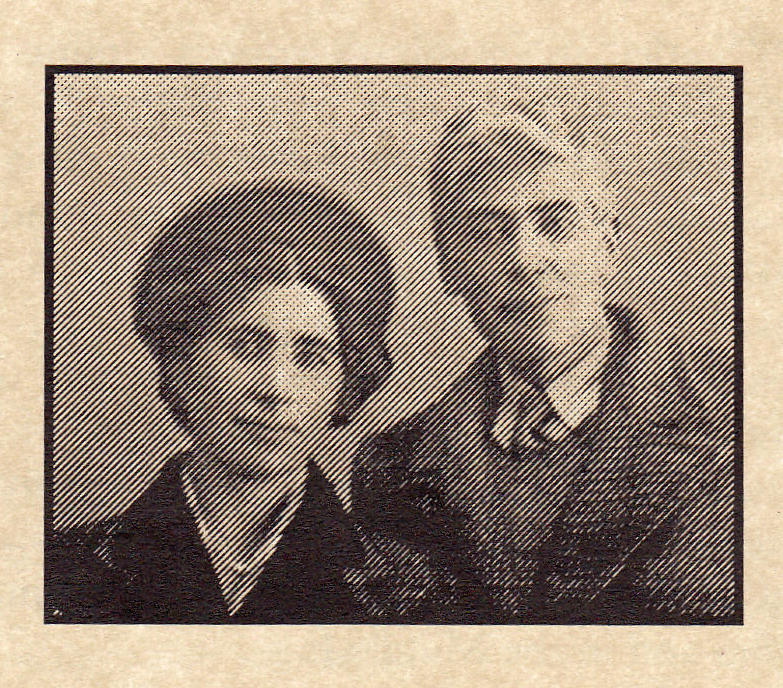
The Honorees - Mishael and Lillie Naby:


Mishael Simon Naby (1898 -1980), poet and pastor, was born in Golpashan, a rich village outside Urmiah. Mishael was the younger son of Shimun, son of Enviya of the Qirmizi clan. His mother, Sarah, had married the widower Shimun with whom she bore three children Enviya, Mishael and a daughter, Almas. While Enviya immigrated to Chicago before World War I, Mishael and Almas remained with the family. Both attended village schools run by Assyrians as part of the American missionary school system established since the 1840s. After primary school, Mishael enrolled at the Urmiah College for Boys, a boarding school, from which he was one of four Assyrian men to graduate in June 1918, a month before Assyrians fled Urmiah as the Ottoman Army spilled into the town.

Mishael became a prisoner of war as the Assyrian army retreated south. Together with two other Assyrians he escaped the prison camp near Khoy and made his way to Tabriz where he was nursed to health at the American mission. He then left for Hamadan where he was employed as a teacher in the Assyrian refugee schools. He continued teaching in Tabriz while waiting with thousands of others to return to Urmiah.

During this period he became a communist sympathizer and his early poetry reflected particularly his growing atheistic tendency. One of the traumas of his early life was the murder of his father, an old man in 1914, who was marched with other Assyrian men to the Christian cemetery and bludgeoned to death. The other was the carrying away of his young sister Almas to an Ottoman military encampment located outside Khoy.

Mishael might have remained a mathematics teacher had he not inherited several revenue producing vineyards from extended family members who had either not survived the genocide or had emigrated from Iran. At the same time, he was recruited as a student by his mentor, a former teacher at Urmiah College, Rabi Pera Amrikhas (1872-1945), to study theology even after the short-lived seminary run under missionary auspices was forced closed in 1934 by the Iranian government. Thereafter he rejected atheistic communism, and turned from teaching to ministry. He supplemented the meager salary this provided with income from the raisin producing vineyards.

In 1941 he married Lillie (Dooman) Yohannan (1906-1991), and spent winters in the city of Urmiah and summers in the village of Golpashan. He and Lillie had two children - Eden Naby (Frye) and Dante Naby.

Literary Life

Mishael always wrote his poems and essays in his first language, the modern eastern Aramaic vernacular of the Assyrians that was developed as a written language during the mid-19th century by the American Board of Commissioners for Foreign Missions. By the time that Mishael entered the educational system, classical Syriac was no longer taught in the modern schools. Much influenced by American writers like Ralph Waldo Emerson whose works he read in English at school and after, nonetheless he could not write in English beyond correspondence.

In his twenties, he began to compose verse under the pen name “Yadgar” (Remembrance). Aside from occasional poems and songs, his major work consists of quatrains based on his experiences of World War I and its aftermath. He drafted and rewrote this biographical poetry which often returned to the refrain, “Ya yada kul, aha dakhiy?” (Oh Knower of all, why this?).

By the time these poems were published in 1970 at Ator Publishing in Tehran, he had already changed their tone from skeptical disillusionment with the protective power of faith in God to symbolic verses only alluding to the suffering he had endured as a Turkish prisoner of war. He found peace in “Grace” a female figure whom he associated with the Holy Spirit. The collection, titled Qdila da-šmaya (Key to heaven), consists of a series of works composed between 1920 and 1960.

During the early 1960s, he decided that his poetry should appear in English translation and engaged his children in this task over a period of two years. The verse translation was published as Psalms and Song of a Persian (New York, 1964).

His last published volume appeared in the form of a dialogue in which theological questions were asked and answered. Composed in Persian, his third language after Assyrian and Turkish, نقشه های خداوند (God’s plans) was also published at Ator Publishing in Tehran (1351[1972]) through the efforts of his wife’s cousin, Charles Sayad.

One of Mishael’s earliest works, an essay co-authored with his Turkish Muslim cousin, Beglerbegi, and published in Urmiah during the 1940s, is now rarely found.

An endowment at Harvard University commemorates his life and that of his wife.


Lillie Yohannan Naby (1906-1991), a teacher in Urmiah, was born in Degala, a village within 10 km of Urmiah. Her mother Avigil (Abigail) married Aurahim Yokhannan (of Ada) who was a widower with one daughter. He brought the daughter with him on his second trip to the United States and placed her in a Presbyterian orphanage in Tennessee.

Like her mother, grandmother, aunt and female relatives, Lillie received her education in the village school but graduated from Fiske Seminary. She fled as a young girl with her aunt, uncle and mother south to Hamadan in 1918. A previous attempt to flee north to Russia in 1915 failed due to the outbreak of cholera among the Assyrians massed at the Arax River border. At the time of her graduation from Fiske Seminary in 1925, the school was operating in Tabriz as a refugee school with a much reduced body of students. Like the three other young women in her class, Lillie too became a teacher, a profession she continued after the American schools were forced closed in Urmiah in 1934. She learned Persian in order to qualify to teach at the government high school for girls called Shahdokht.

For nearly twenty years Lillie taught English and home economics. She was an industrious and inventive woman whose home in Urmiah offered hospitality to visiting Americans among whom were many missionaries as well as academics like Carlton Coon an his family. She was also the organist at the Assyrian Presbyterian Church in Urmiah and was admired for her singing.

After moving to Philadelphia with her family in 1953, Lillie worked at odd jobs to maintain family income but did not teach again. When her husband died, she moved to, Modesto, California where she was able to renew childhood friendships with Assyrian women such as Marta Joseph, and be near her relatives. She took part in the Assyrian community and even acted in community plays. During the last two years of her life, she went to live in Massachusetts with her daughter. She is buried in Philadelphia, with her husband and other Assyrians, under a headstone that reads “Asleep, awaiting the Resurrection.”

Thursday, August 13, 2009

Rabi Polous Khofri and the Youth Choir

We received the following article from Dr. Dennis Gelyana. Dr. Gelyana has been a sponsor and supporter of the Mesopotamian Night project in 2008 and 2009. This article is timely as we have only one day to MN2009 concert and that we have revived a glimpse of Rabi Paulus Khofri Choir group with the creation of Mesopotamian Choir Ensemble. This new choir group will perform two Rabi Khofri's songs (Nation Sacrifices and Vacant Nineveh) with the orchestra as well as the Nation song by Rabi Nebu Issabey.

My name is Dennis Gelyana. I had the privilege of being a member of the Assyrian National and Cultural Youth Center (Qhendroun) Choir in 1980s. The Choir was formed by the center’s Fine Arts Committee. The committee requested Rabi Polous Khofri, a distinguished Assyrian musician who conducted the Assyrian-Chaldean Catholic Church of Tehran’s choir, to create and conduct a national Youth Choir. I remember very well the very first meeting, his magnificent optimism, and his interesting and unique way of encouraging the members to learn and spread their musical heritage.

Rabi Khofri was making the practice sessions so appealing that every single member couldn’t wait for another weekly session of practice/class. His home was also always open for the members to see him with any questions, concerns, or comments.

I would like to mention that at that time there were several political/religious/cultural groups among Assyrians in the country that were not getting along with each other. At such a time, he composed a song for the commemoration of the 50th year after the massacre of Simele, in which he declared to all the groups, “the mother nation will not stop crying unless you accept every single one of your people (with different beliefs and ideas) as your brother. (EIMAN KHOOYEDLOUKH BE KOULE BNE OMTOUKH, HEGAH BED BARZI DAMAAD YEMOUKH.)” The same theme and music seems to be completely fitting for the story of our nation at this very moment.

Another event that must be mentioned was a performance in February 1988. At that year, the Office of Religious Minorities arranged a night for the minorities ( Zorasteans, Jewish, Armenians, and Assyrians) to honor the anniversary of the Islamic Revolution in the main performing arts center of the country, with each displaying their ethnic music. In short, our choir had the least members (13) compared to some choirs that had more than 50 singers. Likewise, our attire was very simple and not even comparable to other minorities. Before the show the members were somewhat discouraged, but Rabi Khofri, with his extraordinary kindness and encouraging voice of wisdom, made us very confident prior to our turn. In the end, our performance was at a much higher level than that of any other minority group; none of the other choirs could compete with it. I remember that backstage the conductor of the Armenian Choir told us that Rabi Khofri was one of his music teachers in Abadan, and the conductor of the Jewish Choir came to Rabi Khofri and asked him to have a performance in their cultural center. The next day the only photograph of the ceremony in the newspaper showed our choir; the only song from the ceremony that got broadcast on national radio was our song, composed by Rabi Khofri and performed by his choir.

Rabi Polous Khofri’s legacy will live on in the hearts of all those whose lives had been touched by him. He will remain a shining star in the history of our art and music for ever and ever!

About Dennis Gelyana, MD, MPH

Dennis was born in Abadan and raised in Tehran, Iran. He is a graduate of Alborz High School and Tehran University Medical School. After graduation he worked as a general practitioner in various settings in Mahshahr and Tehran. In 1995 he along with his wife Valantine, and his daughter, Eilrayna immigrated to the United States of America. He got his Masters degree in Public Health in Community Health Sciences from University of California, Los Angeles (UCLA); and finished his residency in Psychiatry at Rosalind Franklin University of Medicine and Science in Illinois. During his residency he got several awards including being elected to membership at Alpha Omega Alpha Honor Medical Society. He currently is a faculty member at the University of Chicago, Pritzker School of Medicine as well as being in private practice as a board certified psychiatrist in Illinois.

Dennis was an active member of Assyrian Evangelical Church Youth group during his high school years in Tehran, Iran. After the Islamic revolution he was selected by the Assyrian Tehran Association (Moutwa) to be a founding member of the Assyrian National and Cultural Youth Center (Qhendroun). That Youth center during 80s and 90s turned to be one of the most prominent groups that brought together younger Assyrians from different backgrounds to learn from experts and scholars of the community about their literature, culture, art, and history. The center helped the youth to believe in their potential and in the power of their unity. The outcome was outstanding activities, some at incredible high levels with endorsements from many organizations and churches. Dennis after Immigration to the United States has been active as youth counselor in different local Assyrian Churches in California and Illinois.

Saturday, May 9, 2009

Join our growing list of sponsors

The list of sponsors for the Mesopotamian Night 2009 is growing fast. To ensure the continuity of this project we need to attract more sponsors. Interested individuals or organizations email us at aasacvcc@gmail.com. Here is a glimpse on our list so far:

Dr. Nagham Brikha and Dr. Edison Ishaya: This generous couple have been our sponsors for three years in a row now. This year they are our major sponsor. The orchestration of Assyryt: The Symphonic Suite Assyria is made possible by their donation. They are joining us this as members of our honorary committee for the event.

Dr. Eden Naby and Dr. Richard N. Frye sponsored our 2007 event and this year they are joining us a member of the our honorary committee and a major sponsor for the production of the Qateeni Opera.

Mrs. Rozet and Dr. Ebby Paul Jiddo also have been our sponsor for three years. This year they are joining us as member of our honorary committee and sponsors for the Qateeni Opera.

Dr. Christine and Dr. John Michael have also sponsored us for three years now. They are also joining us as members of our honorary committee and sponsors for the symphony orchestra.

Mrs. Beth and Dr. Rami Yelda also is our sponsor for three years in a row now. This year he donated for the production of Qateeni.

Mrs. Rosa and Dr. Sargon Bet Sargis are joining us this year all the way from Denmark to sponsor our symphony orchestra.

Dr. Nahrin and Tony Khoshaba for the Qateeni opera

Mrs. Ramika and Dr. Ben Taimoorazy for the symphony orchesra

Anonymous Sponsor No.1 for the symphony orchestra

Anonymous Sponsor No.2: This sponsor has donated significant amount in honor of our writer Mr. Fred Aprim.

Mrs. Sharon and Mr. Behrooz Abdi donated for the production of the Qateeni Opera.

Mrs. Nanette and Mr. Edward Nazaradeh orchestra sponsors

Mrs. Rachelle S Daniel and Mr. Richard C Griffiths orchestra sponsors

Thursday, April 23, 2009

An Appeal for Sponsorship of 2009 Mesopotamian Night Concert

Dear friends and sponsors of The Mesopotamian Night musical fund raiser

In this letter I am going to give you a short report on our recent progress on the Mesopotamian Night project that started three years ago. I am hoping I will be able to convince you to remain or be our sponsor for 2009 concert which will be held in Modesto, California on August 15, 2009 at the Gallo Center for the Arts.

Mesopotamian Night 2008 had quite a few fruitful results. Our fund raiser contributed over $60,000 to general funds of the Assyrian Aid Society of America (AAS-A). AAS-A spend more than $750,000 on Assyrian Chaldean causes in 2008. Our Central Valley Chapter was part of this success story. We managed to premier excerpts from the first Assyrian Opera Gilgamesh (a work in progress pending on availability of funding) . We managed to orchestrate and revive classical Assyrian folklore songs already forgotten by our people among them four William Daniel songs. We also managed to perform the Assyrian National Anthem “Roomrama” in its orchestrated form not heard before. We demonstrated that combing Mesopotamian inspired art forms and music and western art forms and music is possible and produces fruitful results. One example was the beautiful ballet interpretation of the Mesopotamian myth of the Hullupu Tree. We demonstrated that our pop music has more potential and can go beyond our regular performances at parties and weddings. We managed to produce a DVD and a CD product from our 2008 concert with a quality that is unprecedented in our community thanks to talented Assyrian artists who were inspired to help us achieve this goal. We created a project that many experts in our community and outside our community cooperated to create an unforgettable event. This included musicians, film makers, composers, singers, performing art organizations, etc. This spirit of team work was by itself a major milestone and great experience moving forward.

For the Mesopotamian Night 2009 project we plan to bring in a 50-piece orchestra that would perform the following pieces: Assyryt: Symphonic Suite Assyria - We have funded and completed the creation of two symphonic suites based on the composition works of the Assyrian composer Paulos Khofri. Assyryt will be a major part of MN-2009 concert. The Opera Qateeni: This project which was started two years ago finally has come to fruition. Thanks to the dedication and hard work of a French composer that we were able to inspire to take on this important project. This opera is based on the three volume epic poem Qateeni Gabbara by Rabi William Daniel. We will present one full act of the opera based on chapter seven of the epic: In Malik Tooma's castle. The Overture from the Gilgamesh Oratorio: This is a new project initiated by Rev. Samuel Khangaldy of San Jose CA. The Death of Enkidu Opera Scene from the Gilgamesh Assyrian Opera: This is the continuation of the work on Gilgamesh Opera by John Craton based of Rabi Adddai Alkhas's Assyrian Aramaic version. More Assyrian folklore, classical and popular songs: We are again bringing an interesting array of Assyrian singers to perform at our concert using the 50-piece orchestra. Currently the challenge for the production of our 2009 Mesopotamian Night concert is attracting more funds for the orchestra and other production costs.

We would like to ask you to participate in the success of our project by being an sponsor for our project. While all sponsors will be recognized and mentioned in our program book, we have offered honorary membership in our organizing committee for all sponsors who donate $2500 or more. I appeal to you to join us this year to push the Assyrian art and music one step further. If you have any question you could contact me by my email tonykhoshaba@sbcglobal.net or my cell phone 209-606-5438. The donations could be sent to AAS-A Central Valley Chapter, P. O. Box. 579843, Modesto, CA 95357. Please write in memo “Mesopotamian Night 2009 Sponsor”.

Sincerely,


Tony Khoshaba

Assyrian Aid Society - Central Valley Chapter President
Mobile: 209-606-5438
Home: 209-579-2740
AAS-A Chapter mailing address: P.O. Box 579843, Modesto, CA 95357